mobile menu button

1977-1986

Life of Philosophy

1977 (Age 51)

1978 (Age 52)

1979 (Age 53)

1980 (Age 54)

1981 (Age 55)

1982 (Age 56)

1983 (Age 57)

1984 (Age 58)

1985 (Age 59)

1986 (Age 60)

1977

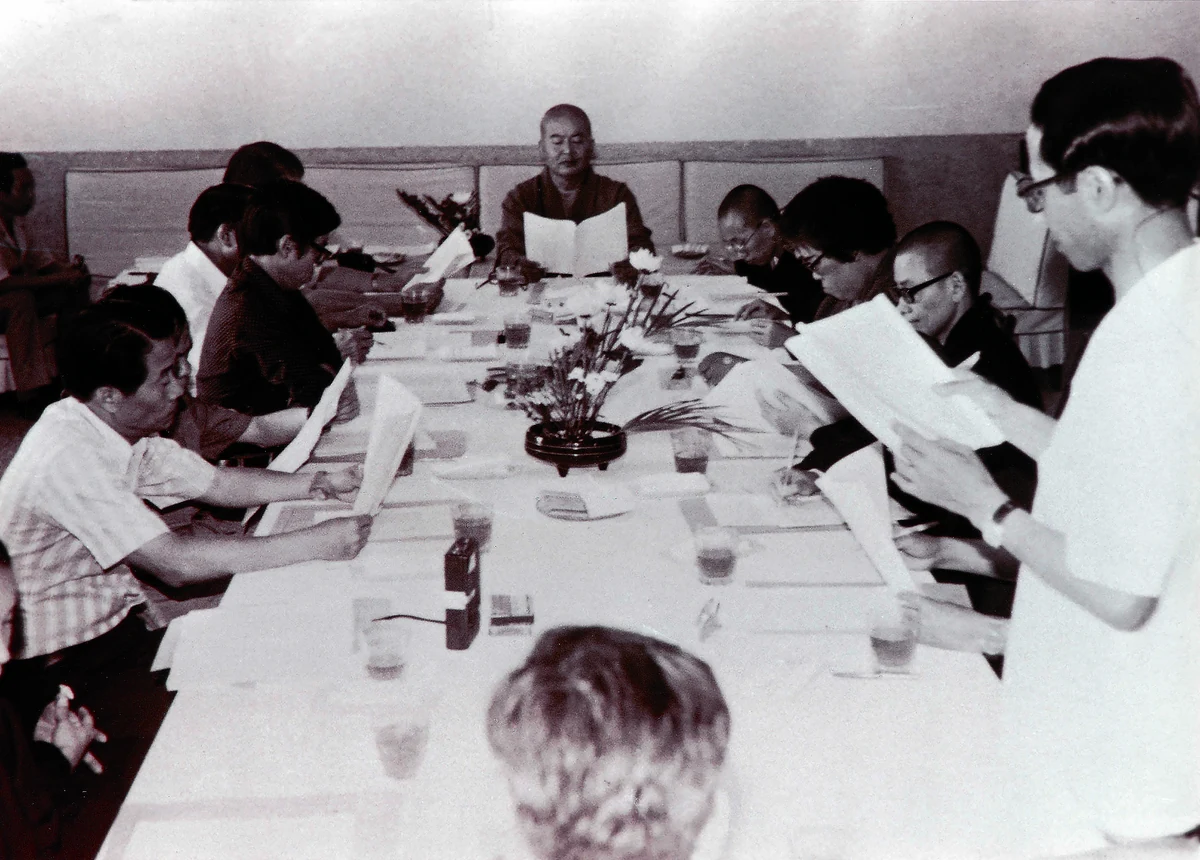
Establishing the "Fo Guang Shan Buddhist Canon Committee"

The Tripitaka was re-punctuated and divided into sections, compiled as the Fo Guang Buddhist Canon.
January 1977

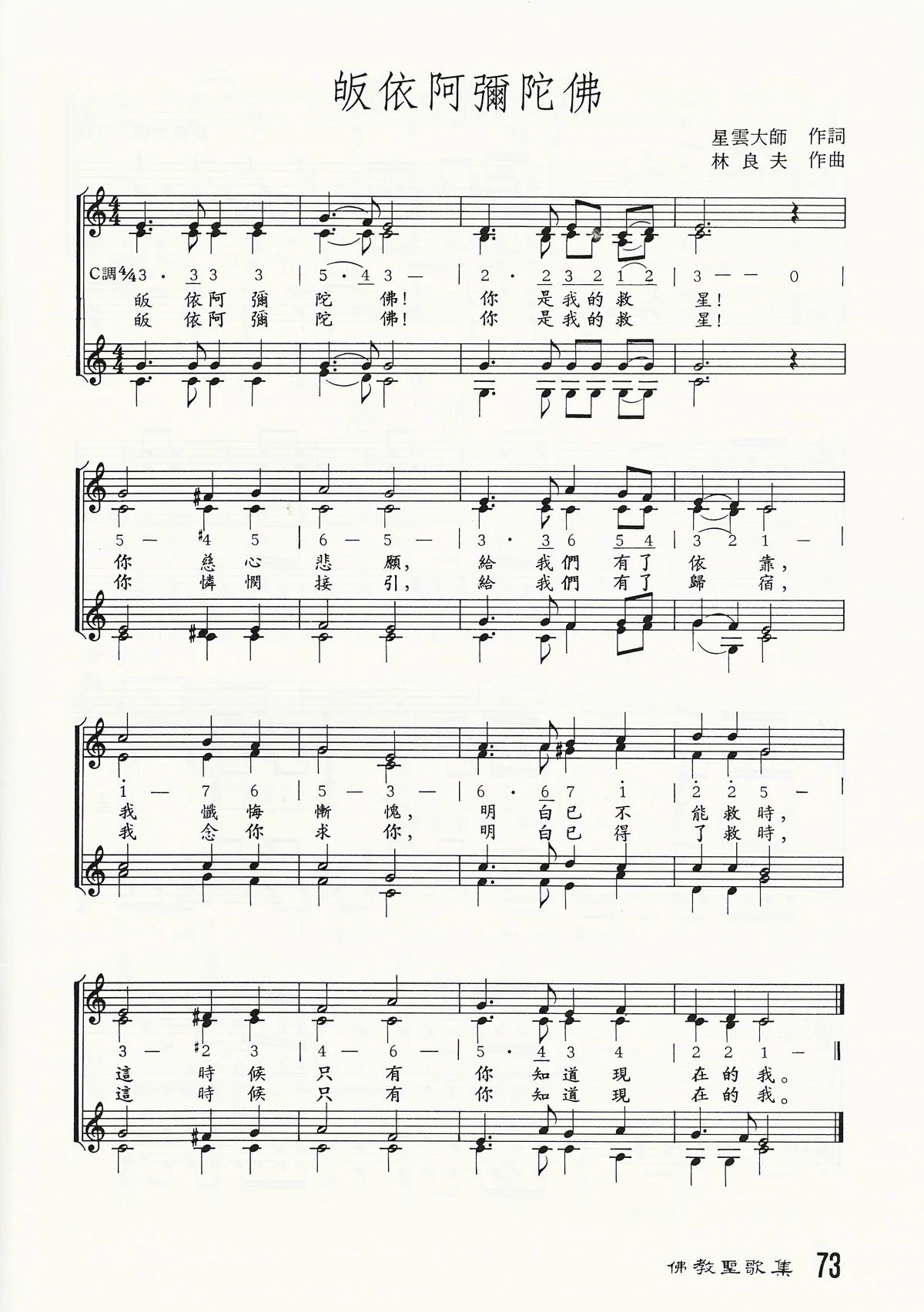
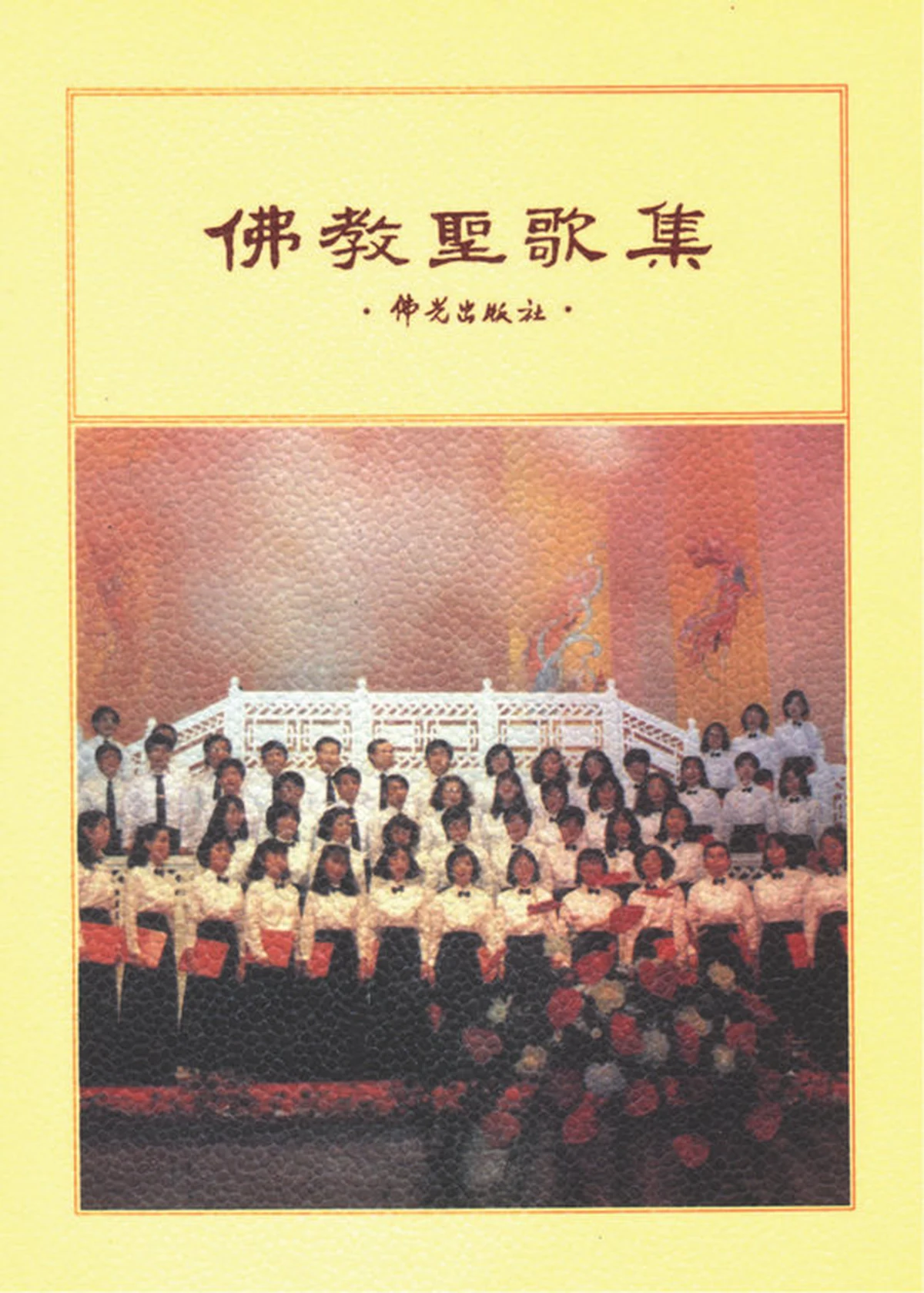
Fo Guang Publishing House publishes A Collection of Buddhist Sacred Songs

In January 1977, Fo Guang Publishing House (now Fo Guang Cultural Enterprise Co., Ltd) published A Collection of Buddhist Sacred Songs. Through the promotion of music, Buddhist songs would spread throughout the three thousand realms, and the Dharma would be proclaimed in billions of lands.
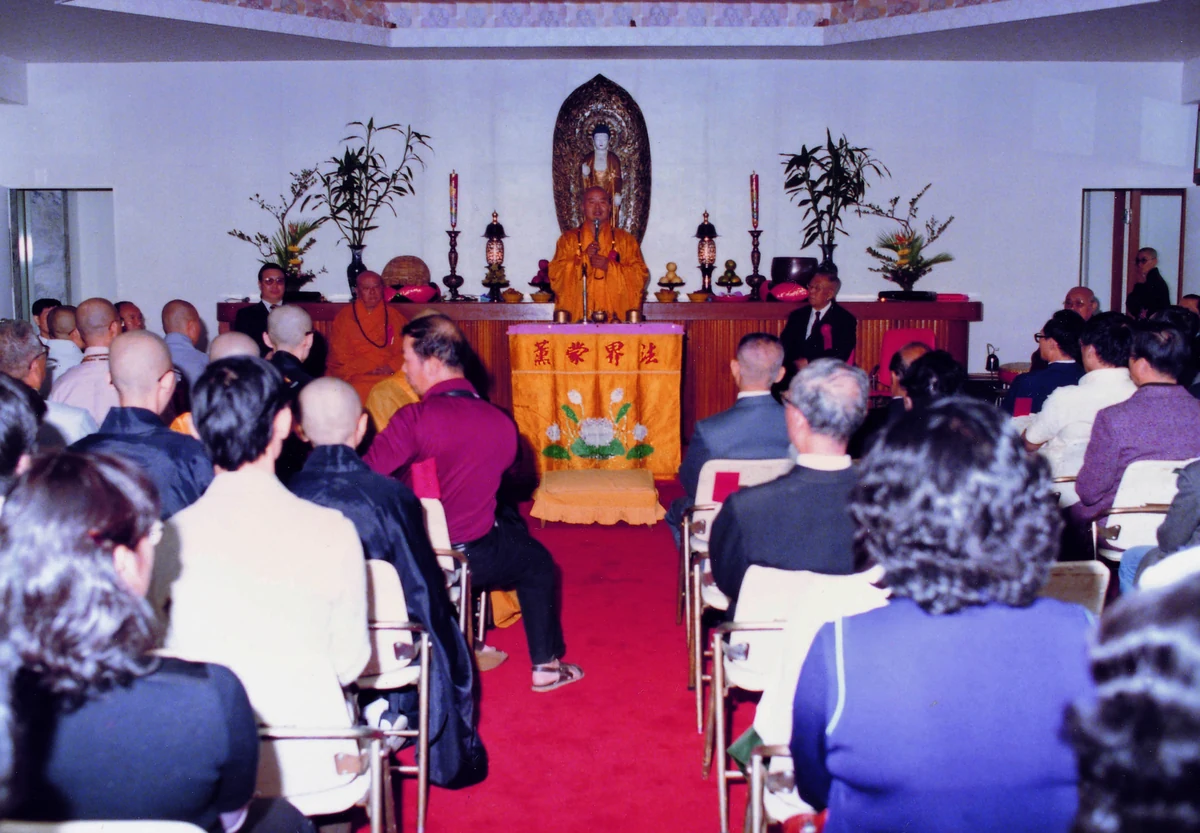
Venerable Master Hsing Yun said that after Buddhism spread from India to China, the earliest propagation methods were simply translating Buddhist sutras. Later, wise ancient masters realized that relying solely on sutra translation and distribution could not spread and popularize Buddhism among the masses. Therefore, they adopted three additional methods: sutra recitation, liturgical chanting, and adapting sutras into popular stories. Among these, sutra recitation and liturgical chanting are what people today know as music.

Venerable Master emphasized that music has tremendous function, it can cultivate temperament and nurture body and mind, especially having important value in propagating the Dharma. To propagate Buddhism, to praise the Buddha's merits, to maintain Buddhist rituals, and to comfort their own body and mind, music must not be neglected.

April 15, 1977

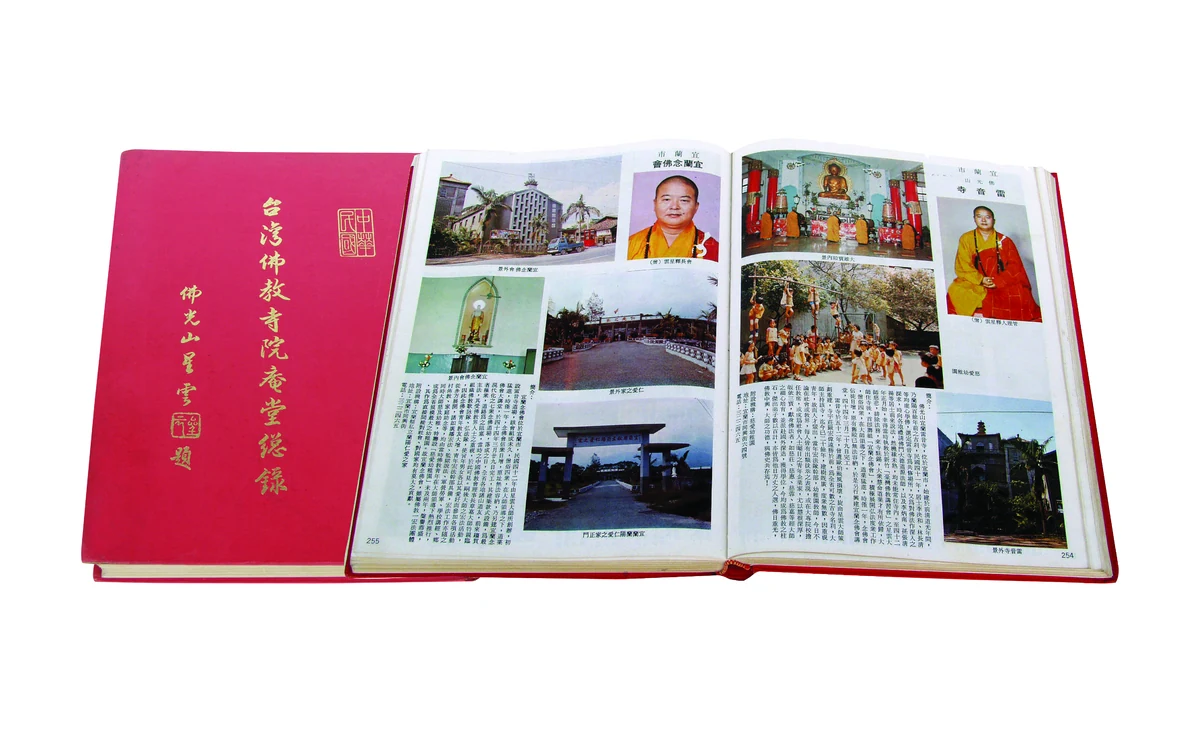
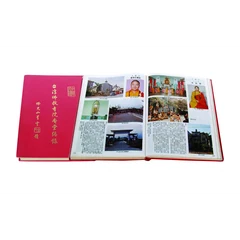
Publication of Directory of Taiwan Buddhist Monasteries, Temples, and Hermitages, Creating the merit of "Book Affinity"

To facilitate communication within the Buddhist community and help the public learn about various temples and practice centers, the first hardcover book detailing Taiwan's Buddhist monasteries, temples, and hermitages, the Directory of Taiwan Buddhist Monasteries, Temples, and Hermitages, was published on April 15, 1977. Venerable Master Hsing Yun noted that father and son Chu Chiang-yuan and Chu Chi-chang completed it after two years of painstaking effort, making multiple trips around the island, and entrusted it to Fo Guang Shan Publishing House (now Fo Guang Cultural Enterprise Co., Ltd) for distribution, leaving an extraordinary record for Taiwan Buddhism. Venerable Master said, "Layman Lin Hsi-shong from Sanchong came to Pumen Temple and met me at the elevator, politely asking: 'Are you Venerable Master Hsing Yun? I want to buy the Directory of Taiwan Buddhist Monasteries, Temples, and Hermitages.'

I thought, 'After so many years, this book has long been out of print. Would I have one?' Nevertheless, I immediately replied, 'Please wait, let me look.' Fortunately, I found the only remaining copy in the bookcase. He took out NT$600 to pay, but I declined: 'This is my gift to you for our first meeting.'

Two months later, he came looking for me, saying, 'I heard you will be giving Dharma talks at the Sun Yat-sen Memorial Hall for three days, giving away over 5,000 lecture collections to the audience each day. Let him print them as a donation.' He happily said it was to repay the kindness of receiving the book."

July 27, 1977

Taking over "Cheng Chi Middle School" founded by Chiang Ching-kuo, Renaming it "Pu-Men Senior High School"

Cheng Chi Middle School, which Mr. Chiang Ching-kuo had established in Jiangxi and later re-established in Taiwan, encountered operational difficulties in 1976. It was subsequently handed over to Fo Guang Shan and renamed "Pu-Men Senior High School." The name "Pu-Men" (Universal Gate) means the gate for guiding all beings, spreading Guanyin Bodhisattva's spirit of compassion; it is the gate for serving all of society, putting into practice Confucius's ideal of teaching without discrimination. Pu-Men Senior High School nurtures well-rounded youth with balanced development in all five areas of education and excellent character and academics, based on Buddhism's spirit of compassion and service to the world.

Venerable Master Hsing Yun said, "From starting enrollment to the school's opening was less than a week, right when Typhoon Thelma hit in 1977, truly as Zhuge Liang said, 'Establishing a school amid wind and rain, taking over during crisis and danger.'

Fortunately, successive principals: Venerables Tzu Hui, Huei-Kai, Hui Chuan, Wang Ting-Erh, Venerable Yi Chun, Chen Nai-chen, Yeh Ming-Tsan, and Lin Ching-po, as well as all the teachers have contributed greatly to the school. Now the trees have grown tall, and graduates have spread throughout the world."

December 1, 1977

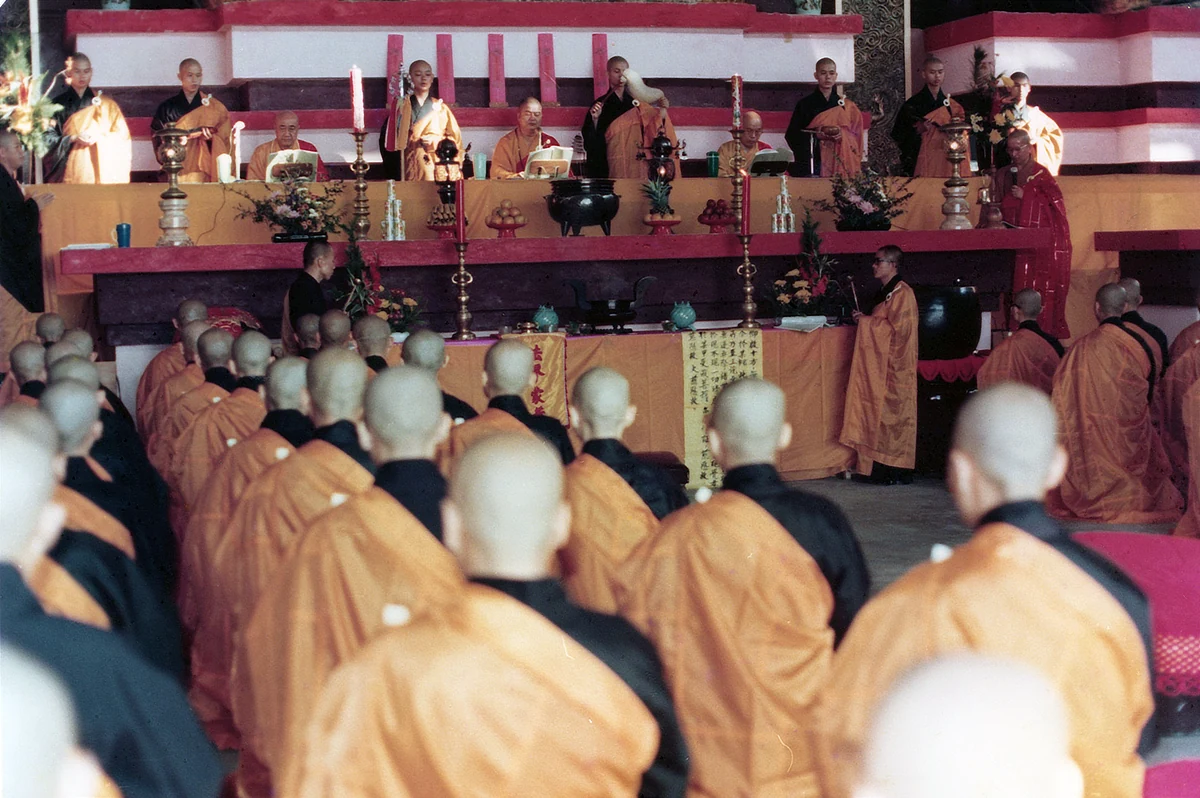
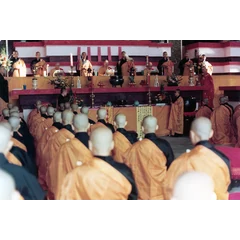
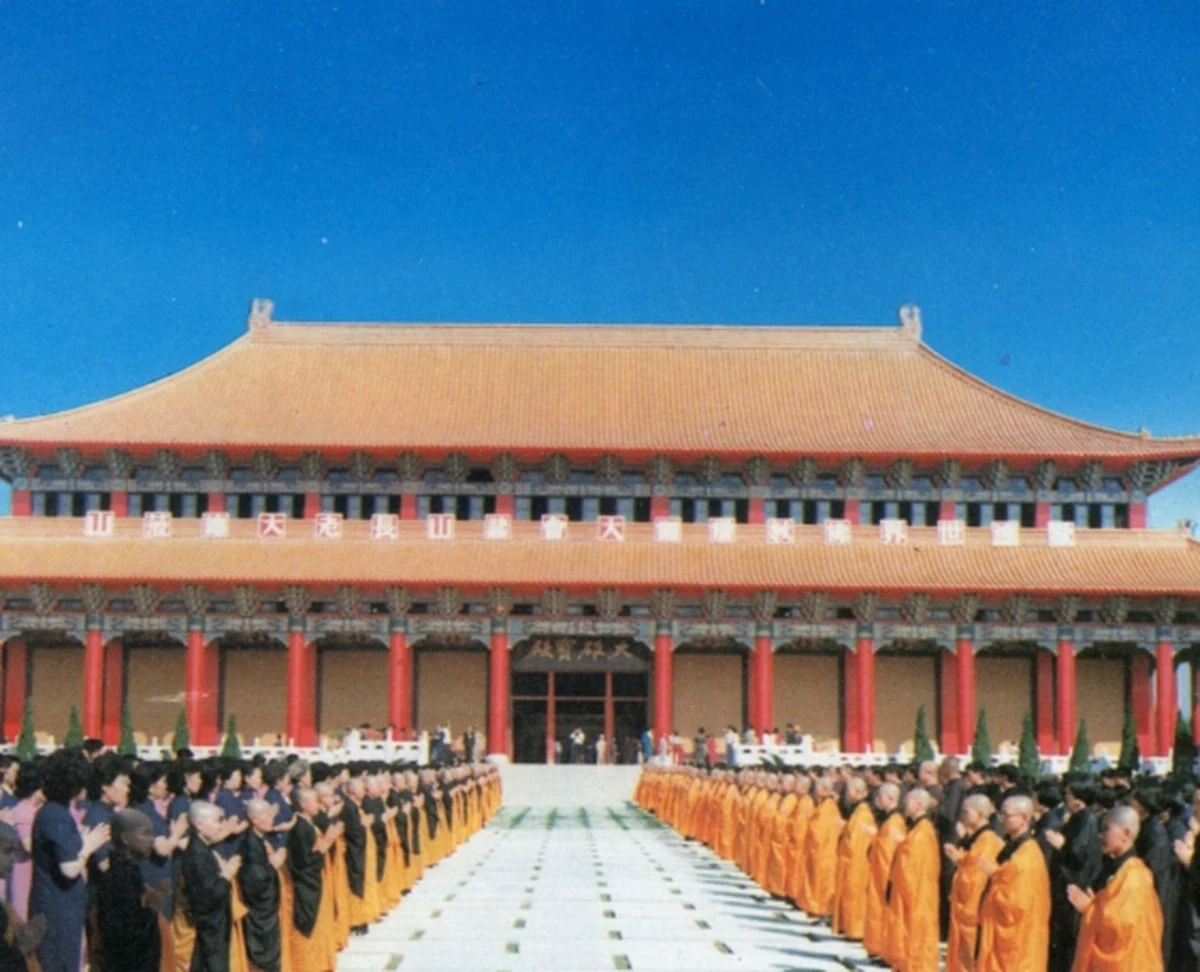
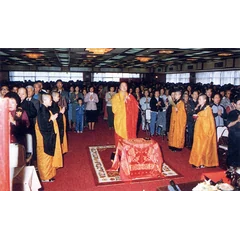
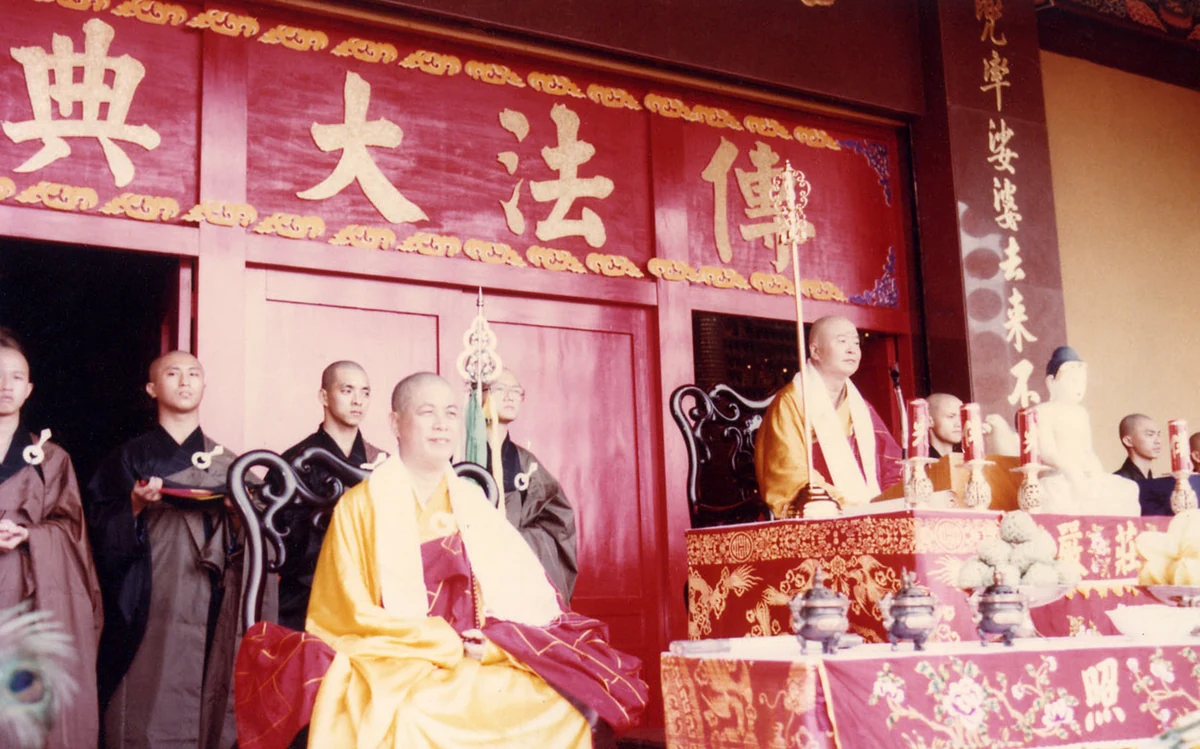
Fo Guang Shan's First Transmission of the "Ten-Thousand Buddha Triple Platform Full Ordination Ceremony"

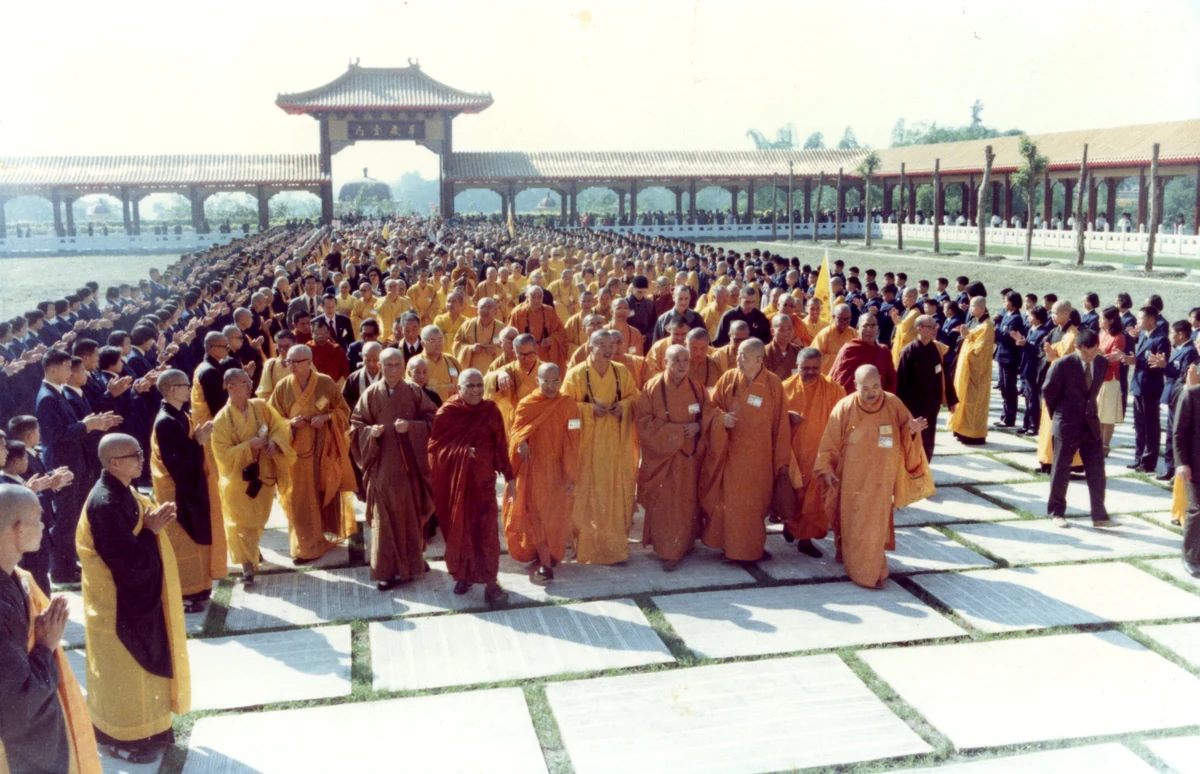
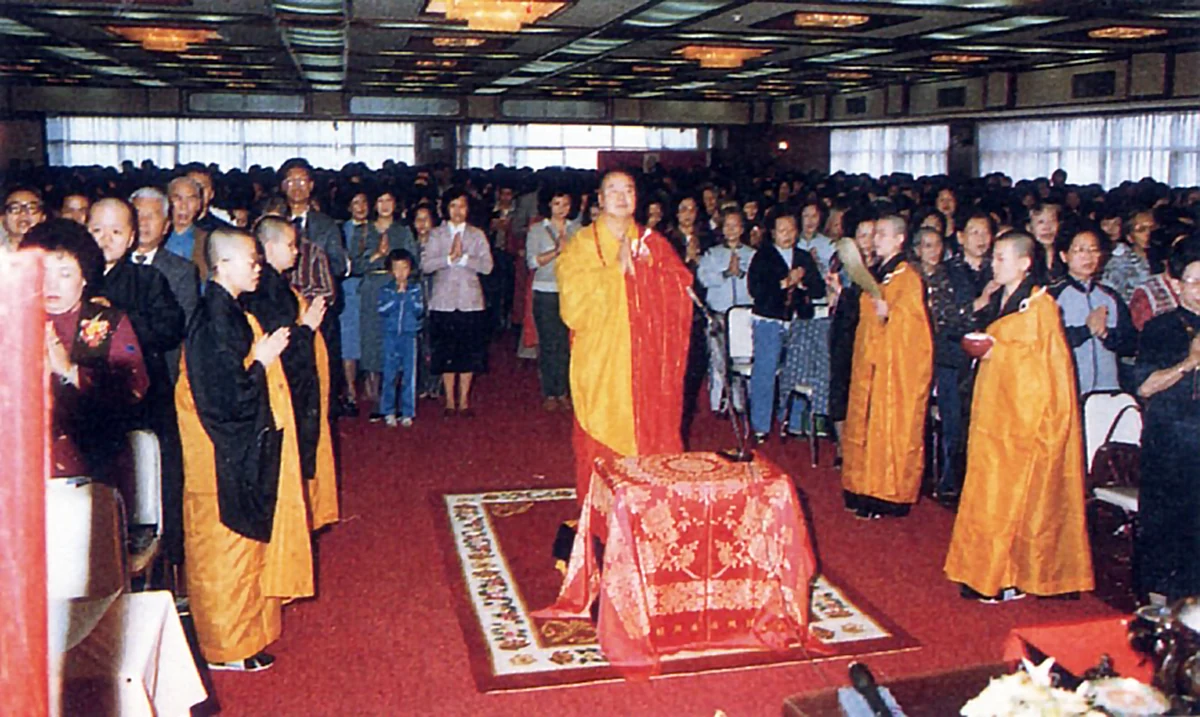
On December 1, 1977, the "Fo Guang Shan Ten-thousand Buddha Triple Platform Full Ordination Ceremony" wrote a brilliant page in Buddhist history, with preceptees from the United States, Hong Kong, Malaysia, the Philippines, Singapore, and Taiwan coming to receive ordination.

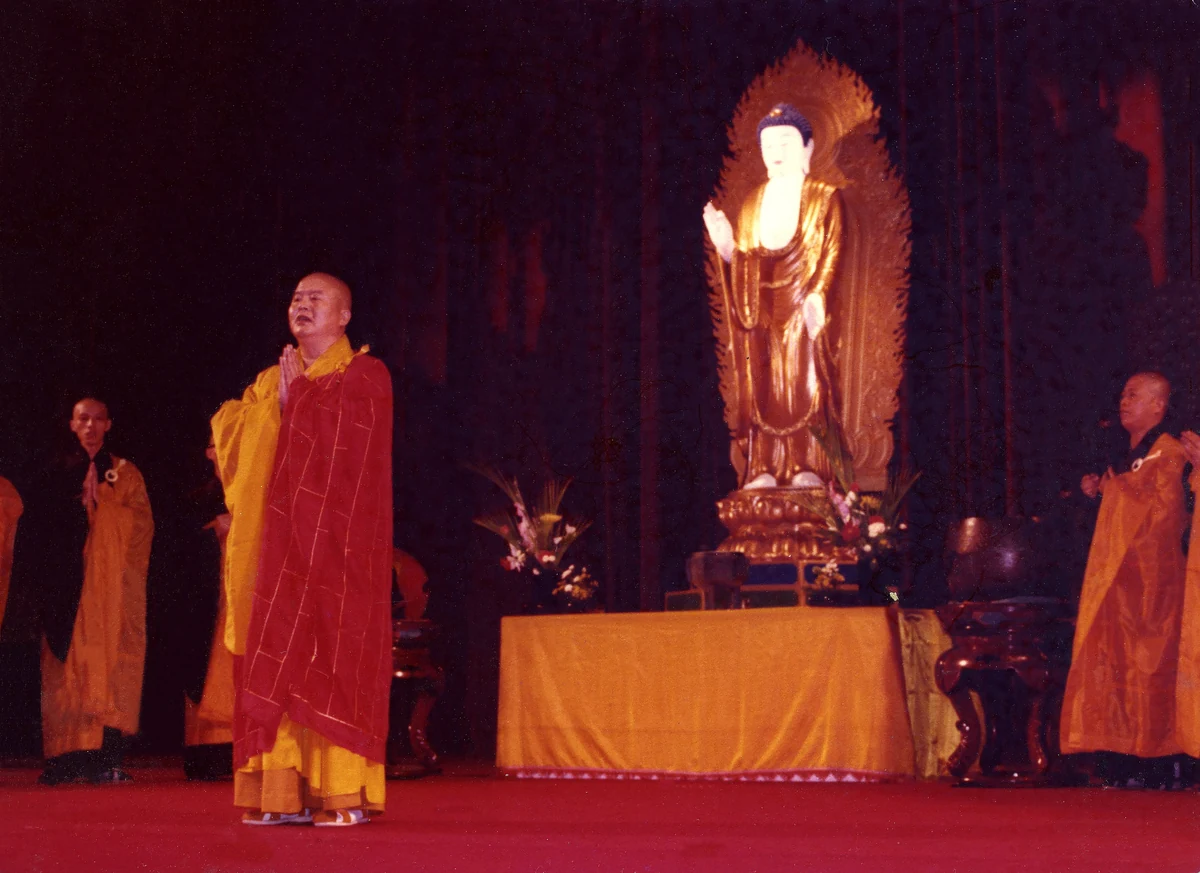
This ordination ceremony emphasized cultivating preceptees' dignified comportment and education in faith and thought, with strict requirements for daily life, and following mainland monastic ordination traditions by inviting teaching ācāryas to ascend the platform for instruction. Besides Venerable Master Hsing Yun, Venerable Chen Hua, and Venerable Zhu Yun serving as the three preceptors, eminent elders from home and abroad, including Venerables Yueji, Wu Yi, Lung-tao, Kai Zheng, and Zhu Mo, were invited as witnessing ācāryas and teaching ācāryas. During the ceremony, following Buddhist tradition, Venerable Master led preceptees on alms round through downtown Kaohsiung. The ordination assembly was praised as a "model ordination."

1978

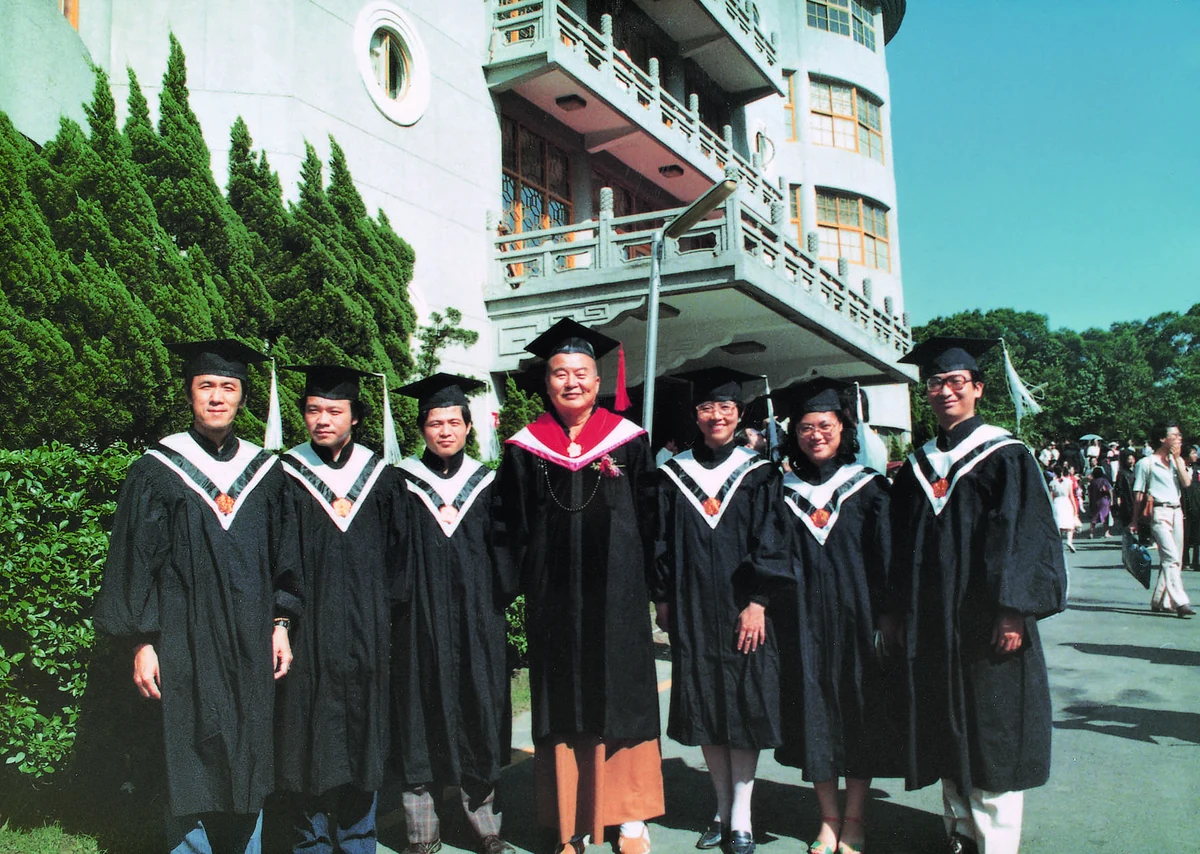
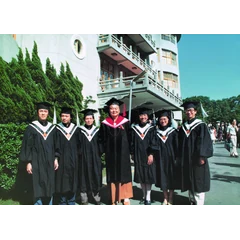
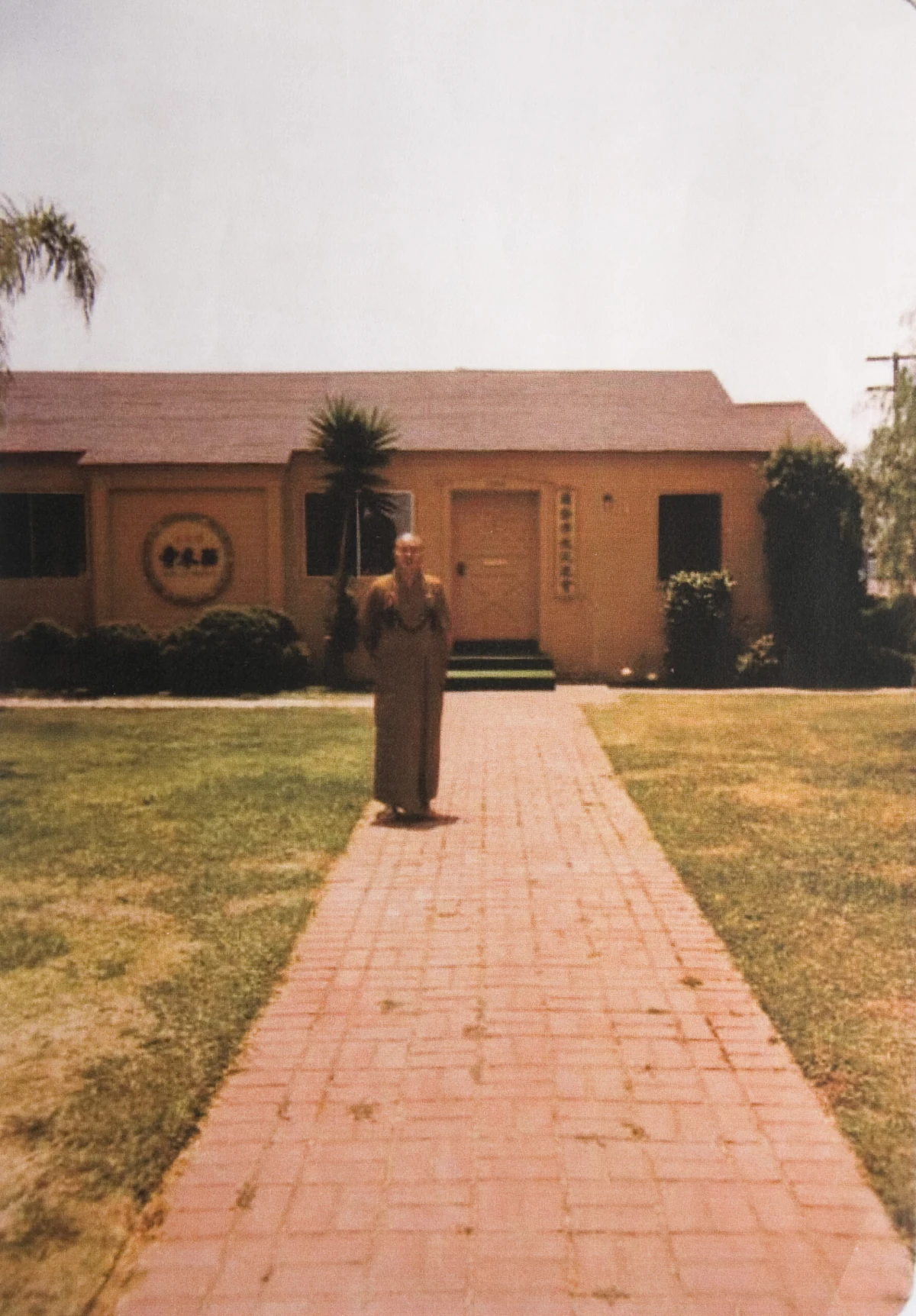
Venerable Master Receives an Honorary Doctor of Philosophy from the Buddha Dharma University (previously College of Oriental Studies), Los Angeles

Venerable Master Hsing Yun subsequently received over 20 honorary doctoral degrees from universities worldwide, including: Mahachulalongkornrajavidyalaya University (Thailand), Universidad Santo Tomás (Chile), Dongguk University (Korea), Mahamakut Buddhist University (Thailand), Griffith University (Australia), Fu Jen Catholic University (Taipei), Whittier College (USA), National Sun Yat-sen University (Kaohsiung), The University of Hong Kong, Geumgang University (Korea), University of Macau, National Chung Cheng University (Chiayi), Uiduk University (Korea), National Pingtung University, and The Chinese University of Hong Kong.

1978

Invited to Attend King Bhumibol Adulyadej's 60th Birthday Celebration; Personally Received by the Thai King

Over the years, Venerable Master has met with leaders from various countries, including: King Bhumibol of Thailand, Indian Prime Minister Nehru, Philippine President Macapagal, Dominican President Señorret, US Vice President Gore, Japanese Prime Minister Fukuda Yasuo, three successive Malaysian Prime Ministers including Mahathir, and three generations of mainland China's national leaders: Jiang Zemin, Hu Jintao, and Xi Jinping.

March 14, 1978

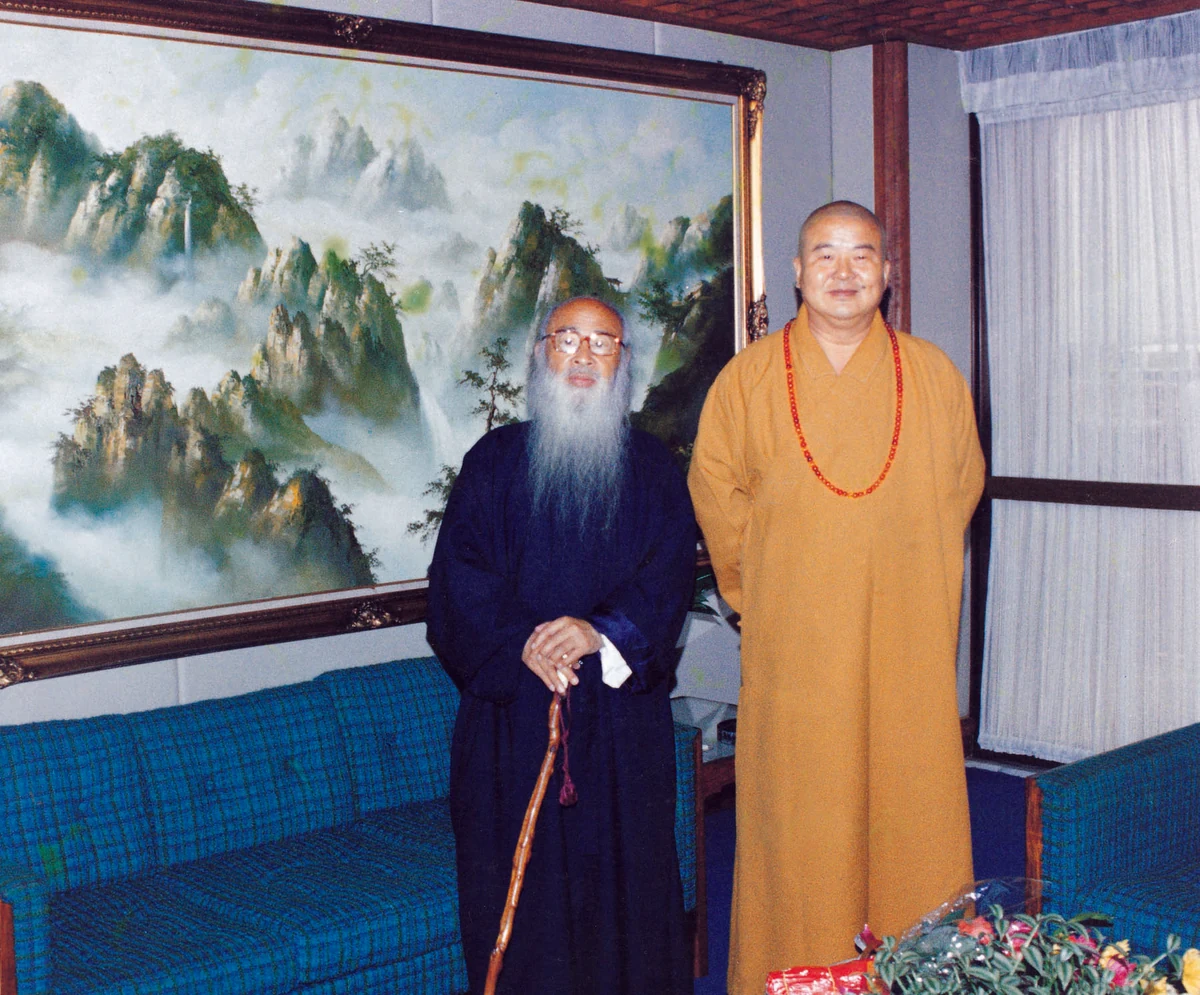
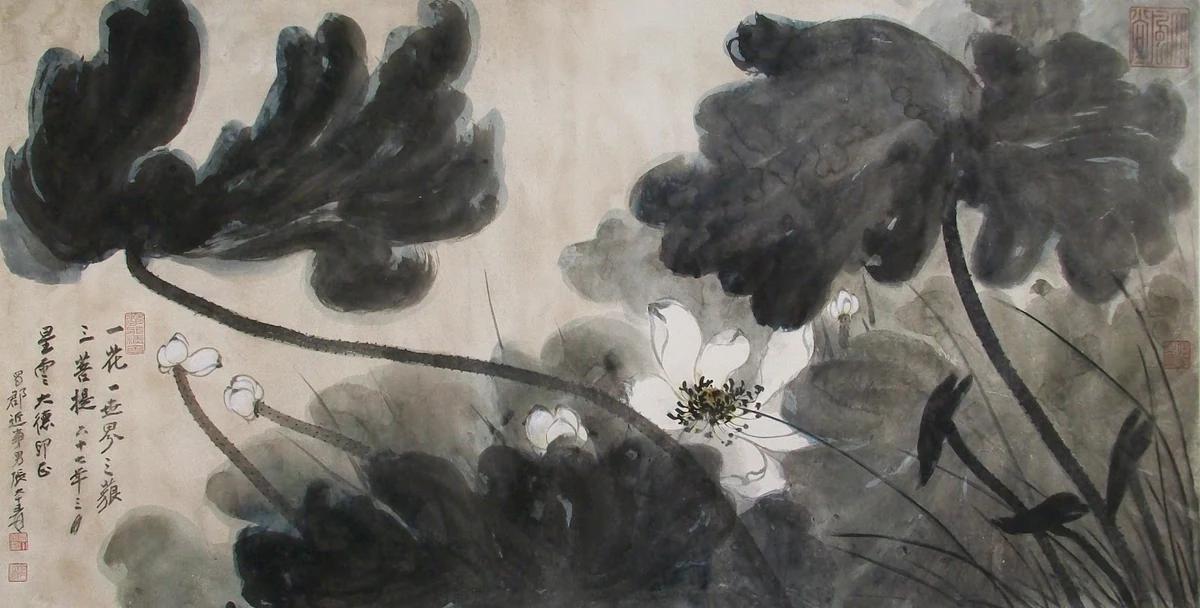
Chang Dai-Chien Visits Fo Guang Shan

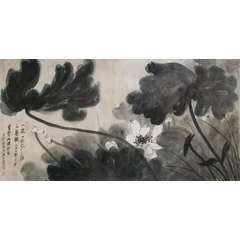
Chang Dai-chien, the world-renowned painter hailed as "the greatest painter in 500 years," visited Fo Guang Shan and presented Venerable Master Hsing Yun with his ink lotus painting inscribed "One Flower, One World; One Leaf, One Tathāgata."

October 16-18, 1978

Buddhist Lectures Marks Its Debut at the Sun Yat-sen Memorial Hall

In October 1978, initiated by Venerable Wu Ming and other Buddhist figures serving as standing directors of the Buddhist Association of the Republic of China, Venerable Master Hsing Yun was invited to hold a three-day "Buddhist Lecture Series" at Taipei's Sun Yat-sen Memorial Hall, the first Buddhist lecture in the history of the National Dr. Sun Yat-sen Memorial Hall. The content is collected in the Complete Works of Venerable Master Hsing Yun: Lecture Series.

Venerable Master used "Life and Faith," "Life and Morality," and "Life and Cultivation" as topics to guide everyone toward a bright, smooth path in life. Venerable Wu Ming gave the opening address, with Venerable Tzu Hui providing Taiwanese translation. Thereafter, Venerable Master held "Buddhist Lecture Series" annually at this venue for over 30 years.

Over the years, Venerable Master's lectures took diverse forms, including formal sutra lectures, popular talks, chanting lectures, and dialogues with notable figures. The content covered various sutras and treatises, doctrines, and theories and practices of different schools. Through these lectures combined with various programs, the public experienced the accessibility of the Dharma and the modernization of Buddhism.

January 10, 1979

First to Bring Traditional Buddhist Morning and Evening Liturgical Chanting into the National Hall

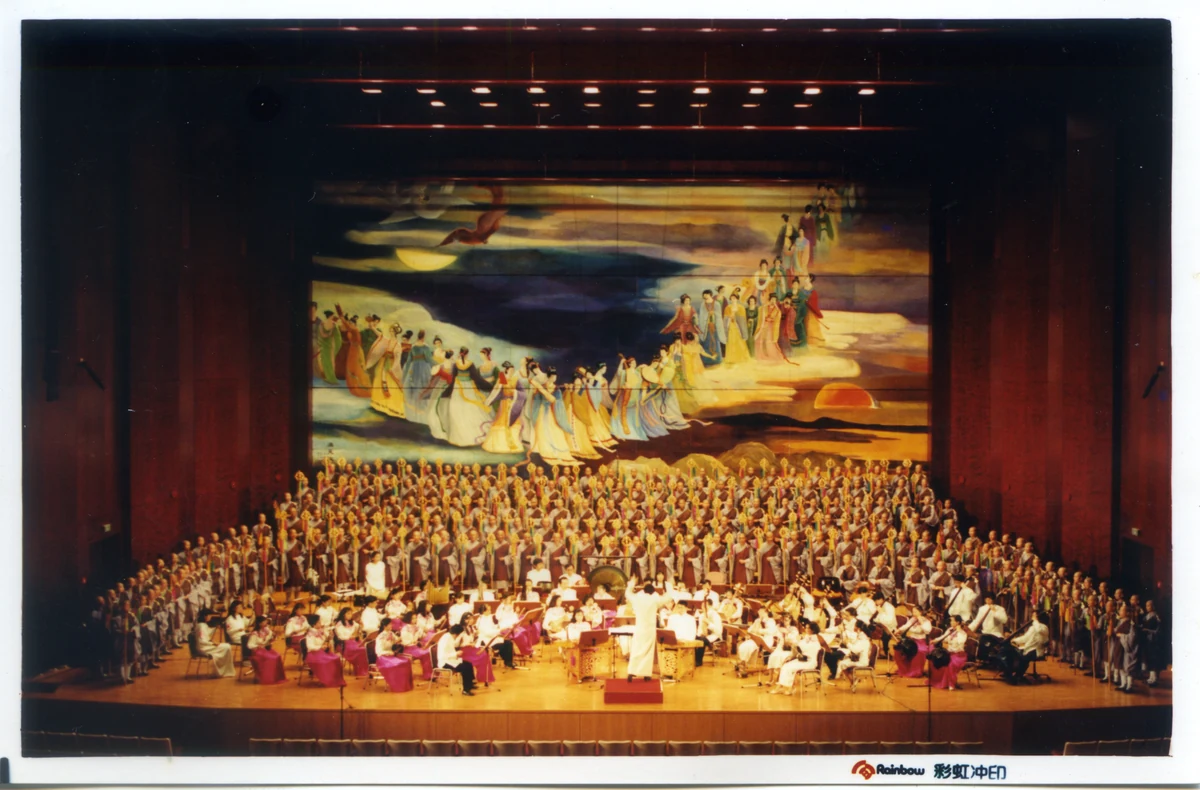
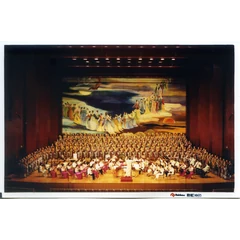
Fo Guang Shan held a "Zhi Jiang Ai Guo Buddhist Music Concert" at Taipei's Sun Yat-sen Memorial Hall. This marked the beginning of Buddhist music entering the national hall and writing a new history for Buddhist propagation.

May 16, 1979

Actively Advocating for "Religious Legislation"

Throughout his life, Venerable Master Hsing Yun actively advocated for "religious legislation," and the government recognized the importance and urgency of religious laws. On May 16, 1979, a "Religious Investigation Team" formed by the Legislative Yuan's Internal Administration Committee made a special visit to Fo Guang Shan to understand the actual situation of Buddhist development and seek Venerable Master's opinions on religious legislation. Venerable Master offered the following important opinions:

Regarding Temple Managers:

i) Temple manager positions should be abolished. The highest administrative authority of a temple belongs to the abbot; having both a manager and abbot creates two heads, adding unnecessary disputes.

ii) If manager positions are not abolished, the abbot should serve concurrently. Temple abbots are all monastics, while most managers are laypeople; having laypeople manage monastics violates Buddhist regulations.

iii) If temples must register as foundations, the chairman should be the abbot serving concurrently, and manager positions should be abolished.

iv) Abbots and managers should have qualification requirements: must have graduated from an advanced Buddhist college of 3+ years; must have received full monastic ordination for 5+ years; must have propagation teacher qualifications.

v) Such restrictions on abbots and managers would improve quality, eliminate superstition, remove charlatans, and reduce social disorder.

September 4, 1979

Pioneering Buddhist Television Propagation

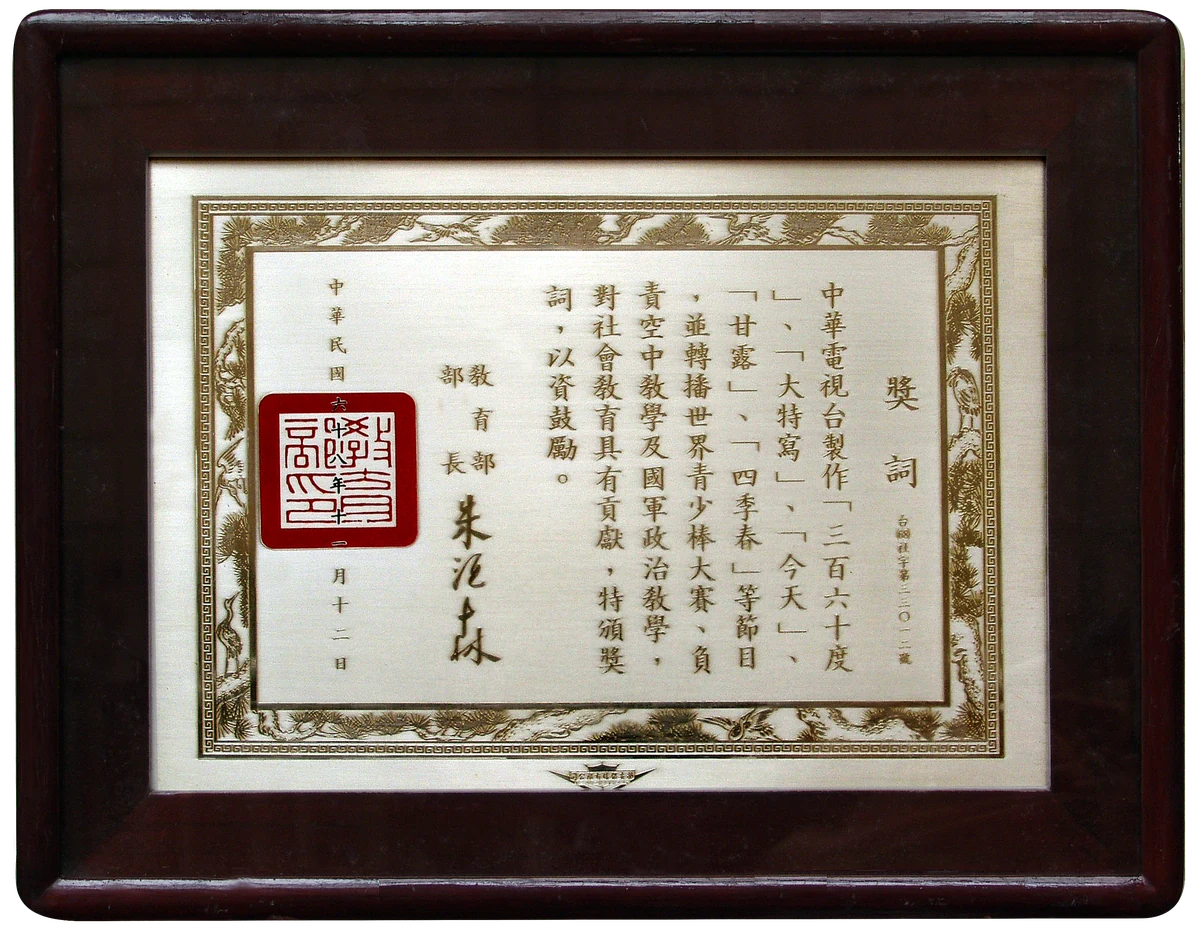
Starting September 1979, the "Nectar" program produced by Fo Guang Shan aired on Chinese Television System (CTS), pioneering Buddhist television propagation. With correct themes encouraging people to do good, it greatly aided in purifying hearts and improving social customs. In November, it received the "Golden Bell Award for Social Education" from the Government Information Office and the Ministry of Education. In December, the drama series "Living Buddha of Mount Jin" was launched, marking a new milestone in Buddhist propagation.

Subsequently, "Gateway of Faith" aired on China Television Company (CTV), and "Platform Sutra of the Sixth Patriarch" and "Venerable Master Hsing Yun's Buddhist Lecture Series" aired on Taiwan Television Enterprise (TTV), all receiving the "Golden Bell Award for Social Development." Venerable Master then appeared on all three stations: TTV, CTV, and CTS, to present "Hsing Yun's Parables," "Hsing Yun's Verses," and "Hsing Yun's Dharma Words," and was invited to give talks at military bases, campuses, prisons, factories, and national halls. From domestic to international, he traveled the world propagating the Dharma globally.

December 8, 1979

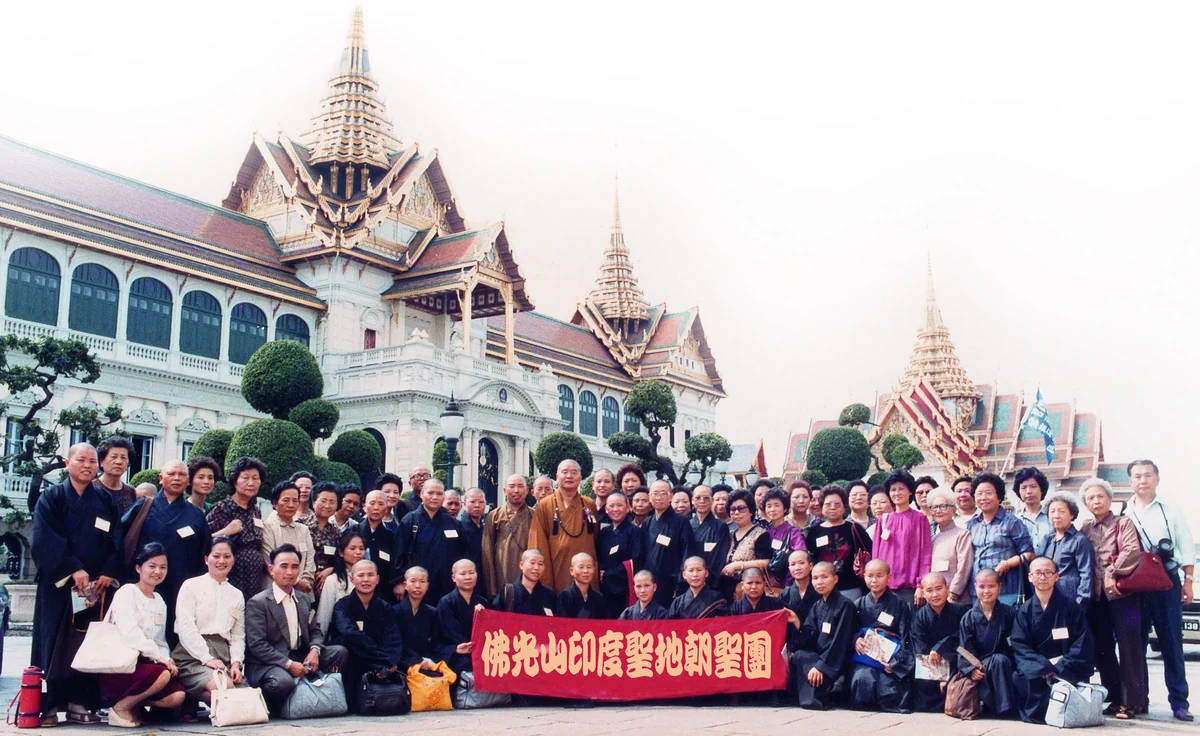
Leading an "India Pilgrimage Group" of 200 People to Visit the Buddha's Sacred Sites in India

On December 8, 1979, Venerable Master Hsing Yun led the largest Fo Guang Shan India Pilgrimage Group in Buddhist history to the birthplace of Buddhism to pay homage at the Buddha's sacred sites.

The group of nearly 200 people spent 21 days visiting Bodh Gaya, Lumbini Garden, Kuśinagara, Rājagṛha, Deer Park, the Taj Mahal, and other sites in India, as well as Buddhist temples in Hong Kong and Thailand, completing a successful Buddhist exchange.

Venerable Master noted that India's tourism industry was undeveloped at the time, with poor sanitary conditions. Despite "numerous difficulties," they fearlessly chartered two planes filled with relief supplies: food, clothing, blankets, and Chinese Buddhist materials, books, and Buddha images, to form affinities with the local people. All group members were happy and healthy. Through their pilgrimage to the Buddha's sacred sites, they elevated their spirit and commitment to the Way.

For pilgrimages to India, Xuanzang's Records of the Western Regions is essential reading for travel and archaeology. In October 1980, Venerable Master published the Fo Guang Shan India Pilgrimage Special Edition, considered the best reference book for pilgrimages to India.

February 16, 1980

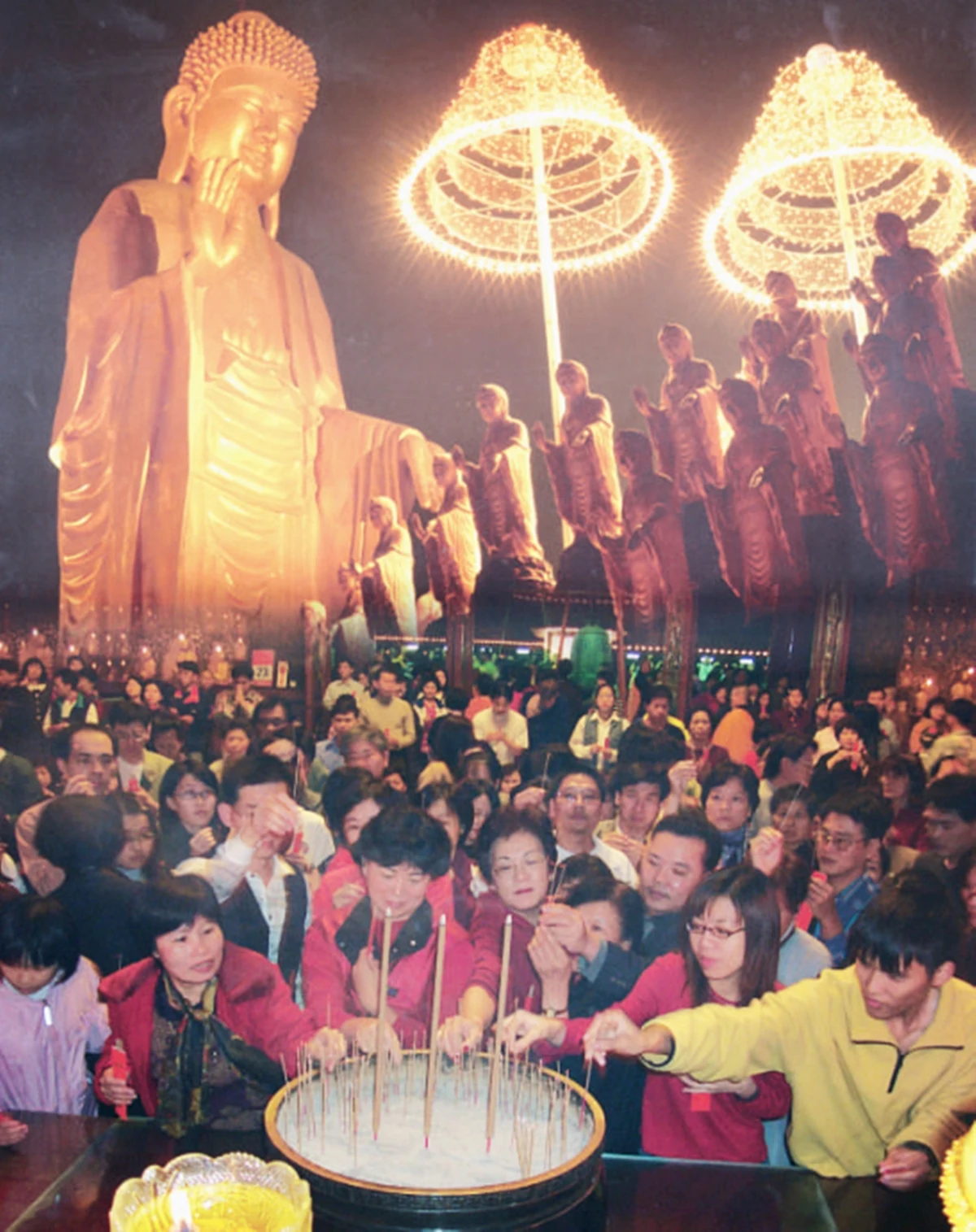
Pioneering "FGS Festival of Light And Peace" Lantern Exhibitions

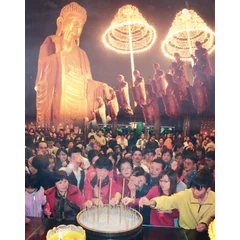
On February 16, 1980, Fo Guang Shan pioneered a uniquely meaningful "FGS Festival of Light and Peace" (New Year incense burning), simultaneously holding a "Buddhist Story Electric Lantern Exhibition." This pioneered the Buddhist community's combination of traditional lantern art with propagation education, becoming a major annual event at Fo Guang Shan during Chinese New Year, attracting millions of participants. This activity provides the public with a place of brightness, peace, and educational significance during the New Year.

May 24, 1980

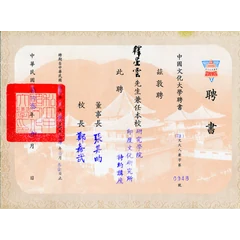
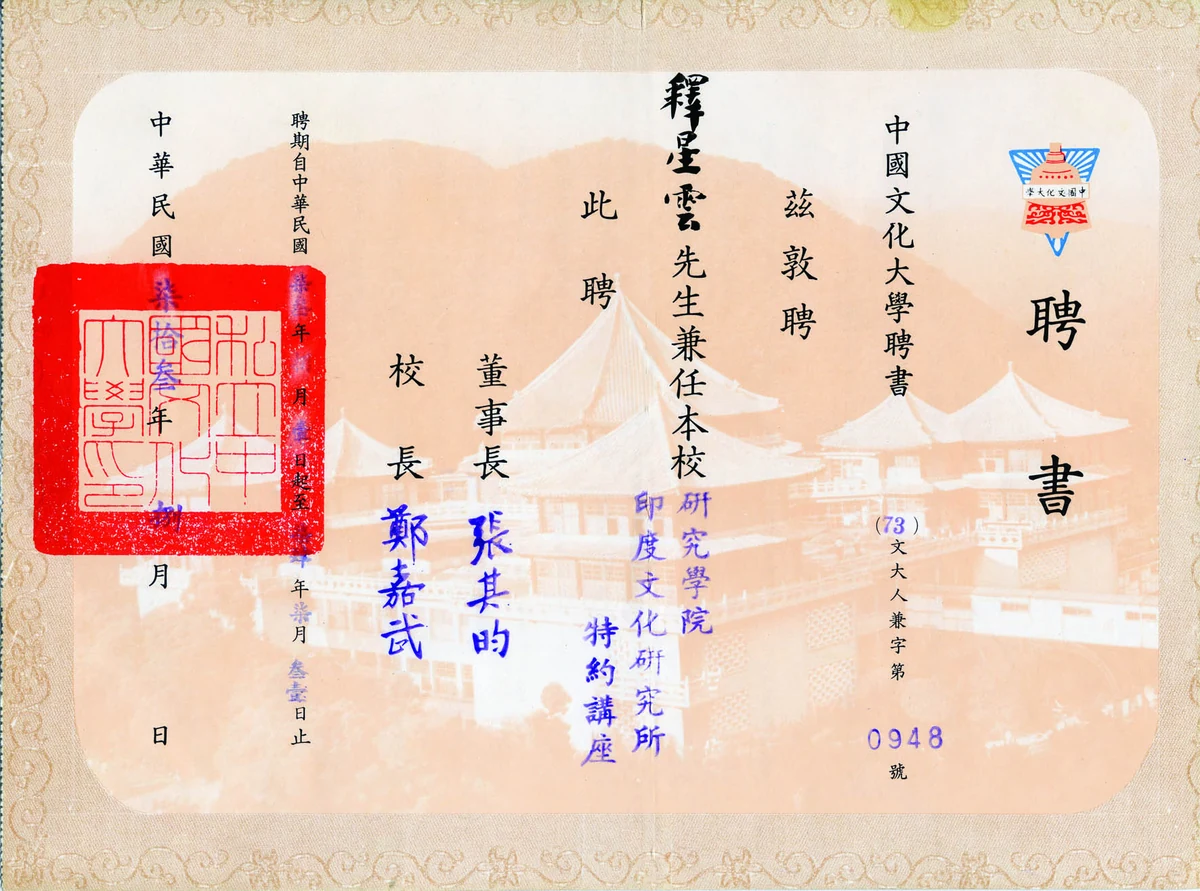
Serving as Director of Chinese Culture University's Graduate Institute of Indian Culture

In 1980, on Chinese Culture University's 18th anniversary, founder Chang Ch'i-yun invited Venerable Master to serve as Director of the Graduate Institute of Indian Culture, and invited Venerable Tzu Hui to serve as professor of "Japanese" and "Early Buddhism."

Founder Chang compared academics to a five-story pagoda, ascending through humanities, arts, and philosophy, with religion at the top, the pinnacle of academia. Thus, such talent must be cultivated for the nation, leading to the establishment of the "Graduate Institute of Indian Culture," Taiwan's first graduate institute for religious culture.

Venerable Master said, "When I arrived on time at Hwa Kang, he had arranged for all department heads to welcome me in the auditorium, and addressed them saying, 'Chinese Culture University is located at Hwa Kang. Hwa Kang is a monastic grove. Today we welcome the abbot of the monastic grove home.'"

February 5, 1981

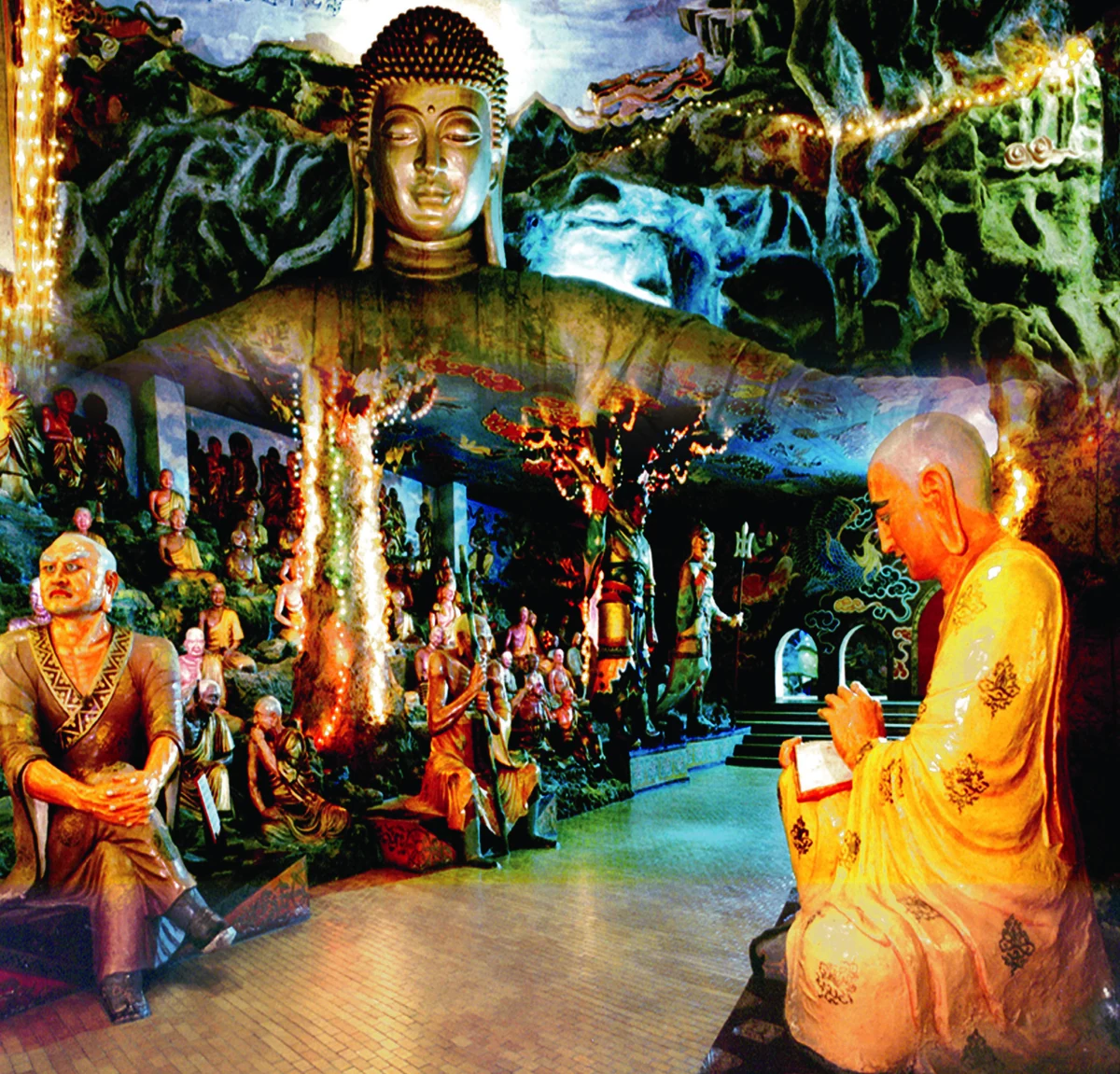
"Pure Land Cave" Completed After Ten Years of Construction

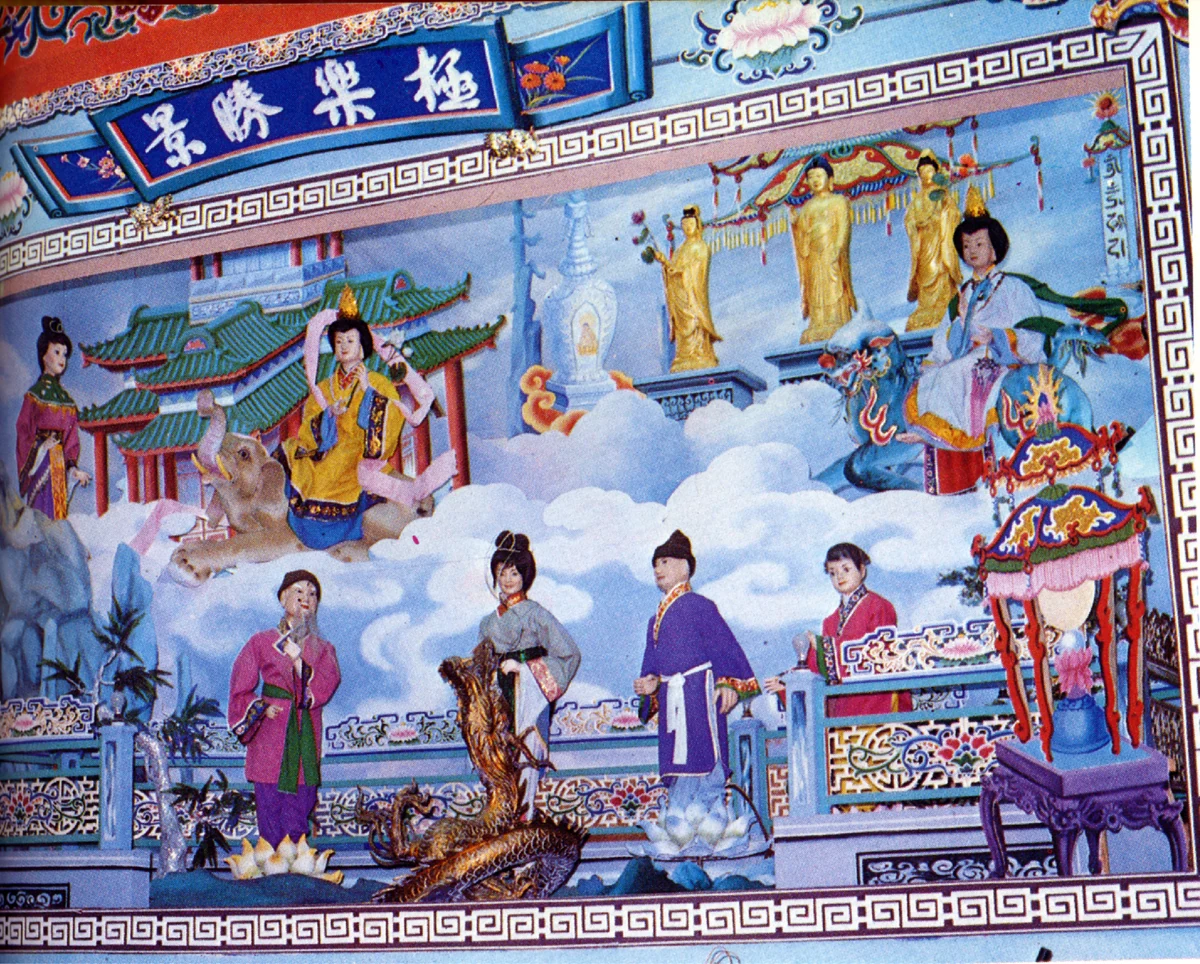
On February 5, 1981, the "Pure Land Cave," located in the ravine on both sides of the Non-Duality Gate, was completed after ten years of construction. Forming a "U" shape, it is Taiwan's first educational display built according to the Amitabha Sutra's description of the Western Pure Land.

Some asked, "Why not build the Ten Courts of King Yama or the Eighteen Levels of Hell to serve as warnings?"

Venerable Master Hsing Yun felt that rather than making people fearful of doing bad things, it was better to build the Pure Land so people would aspire to its wonderful excellence and actively do good and accumulate virtue.

Venerable Master said that education is one of Fo Guang Shan's continuous goals and the greatest purpose of its founding. Besides actual educational institutions and educational activities for devotees, the greatest goal is to build Fo Guang Shan into a school-like public monastery.

The Pure Land Cave presents the entire Amitabha Sutra through art, painting, lighting, sculpture, and sound, the gentle breeze, birdsong, and flowing water all proclaim the Dharma to devotees and visitors.

March 2, 1981

Serving as Professor at Tunghai University Department of Philosophy

In 1981, Tunghai University President Mei Ko-Wan invited Venerable Master Hsing Yun to serve as Professor in the Department of Philosophy with senior professor's treatment, teaching "Buddhist Philosophy of Life." This originated in winter 1980 when Venerable Master was invited by the Chinese Philosophy Society's annual meeting to lecture on "The Characteristics of Chinese Chan Buddhism" at Tunghai; afterward, Tunghai faculty and students made the request.

To propagate the Dharma and benefit beings, Venerable Master happily accepted the appointment and gave his first lecture on March 2. Students filled the hall; due to the overwhelming enrollment, some were forced to stand outside the windows to listen. The course was divided into ten lectures:

1) General Introduction to Buddhist Philosophy of Life;
2) Basic Buddhist Theory;
3) Human Vehicle Buddhist Philosophy;
4) Heavenly Vehicle Buddhist Philosophy;
5) Śrāvaka Vehicle Philosophy of Life;
6) Pure Land Philosophy of Life;
7) Chan Philosophy of Life;
8) Tiantai Philosophy of Life;
9) Huayan Philosophy of Life;
10) Prajñā Emptiness Philosophy of Life.

May 1981

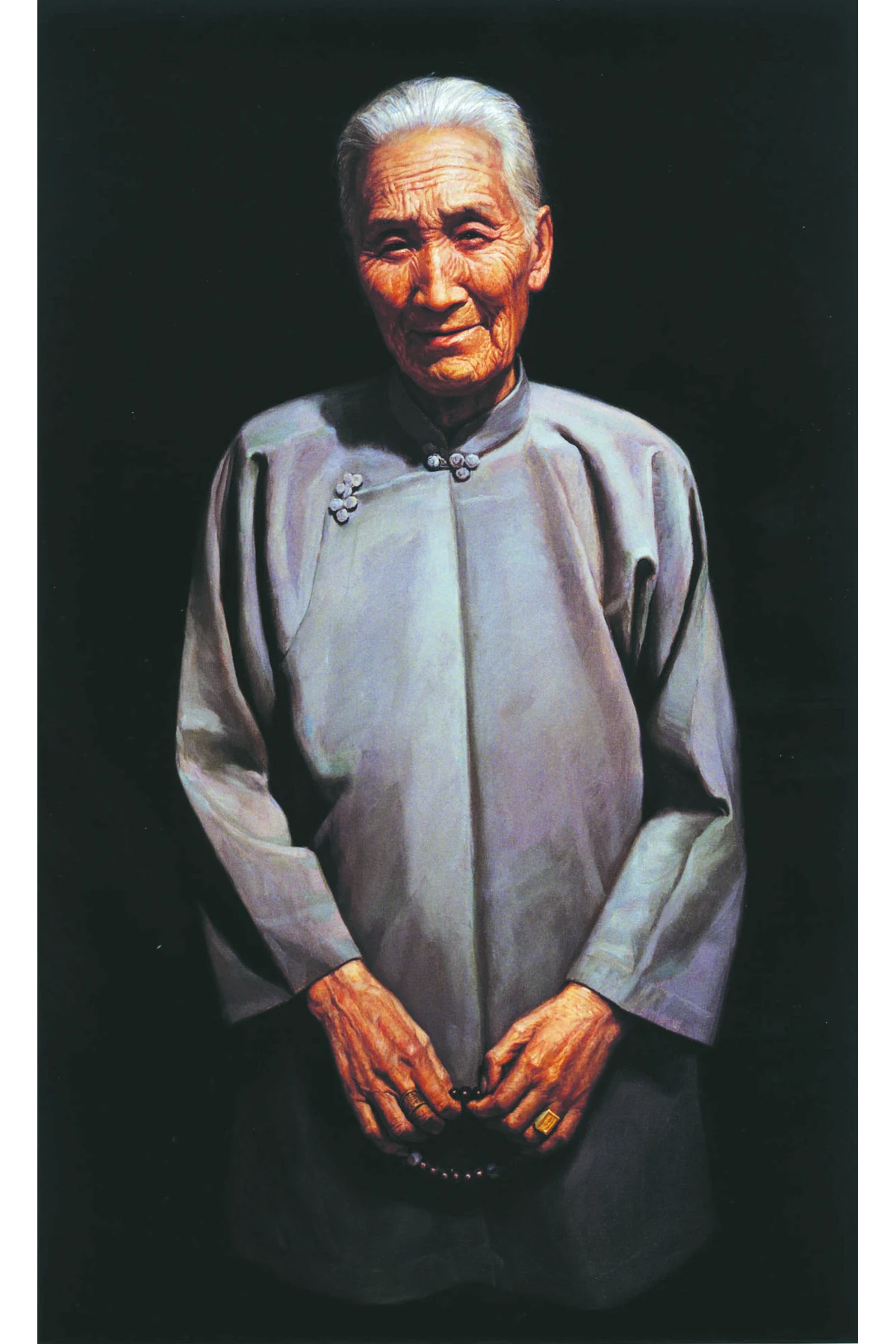
First Meeting with His Mother After 40 Years of Separation

In May 1985, Venerable Master Hsing Yun met his mother (after being separated for 40 years) at the Bellustar Tokyo in Tokyo. Venerable Master said he momentarily could not grasp his feelings. He recalled that when he received full ordination at age 15, his mother had traveled dozens of miles to visit him. Unable to bear his departure at that time, she wept continuously. He had to stay to comfort her and hid under her blanket for a night.

To compensate his mother, Venerable Master specially arranged for her to stay in the Presidential Suite on the 32nd floor of the hotel. Although there was a luxurious dining room and living room, the simple old lady never used them, and would not even let Venerable Master take her outside to visit the Tokyo Imperial Palace or Tokyo Tower. Venerable Master said his mother looked at him intently, "I came to see you!" This was his mother, hoping that amid his busy propagation work, there would be opportunities to accompany her on walks to fulfill a son's duty.

December 6, 1981

Third World Buddhist Sangha Council Delegation Visits Fo Guang Shan

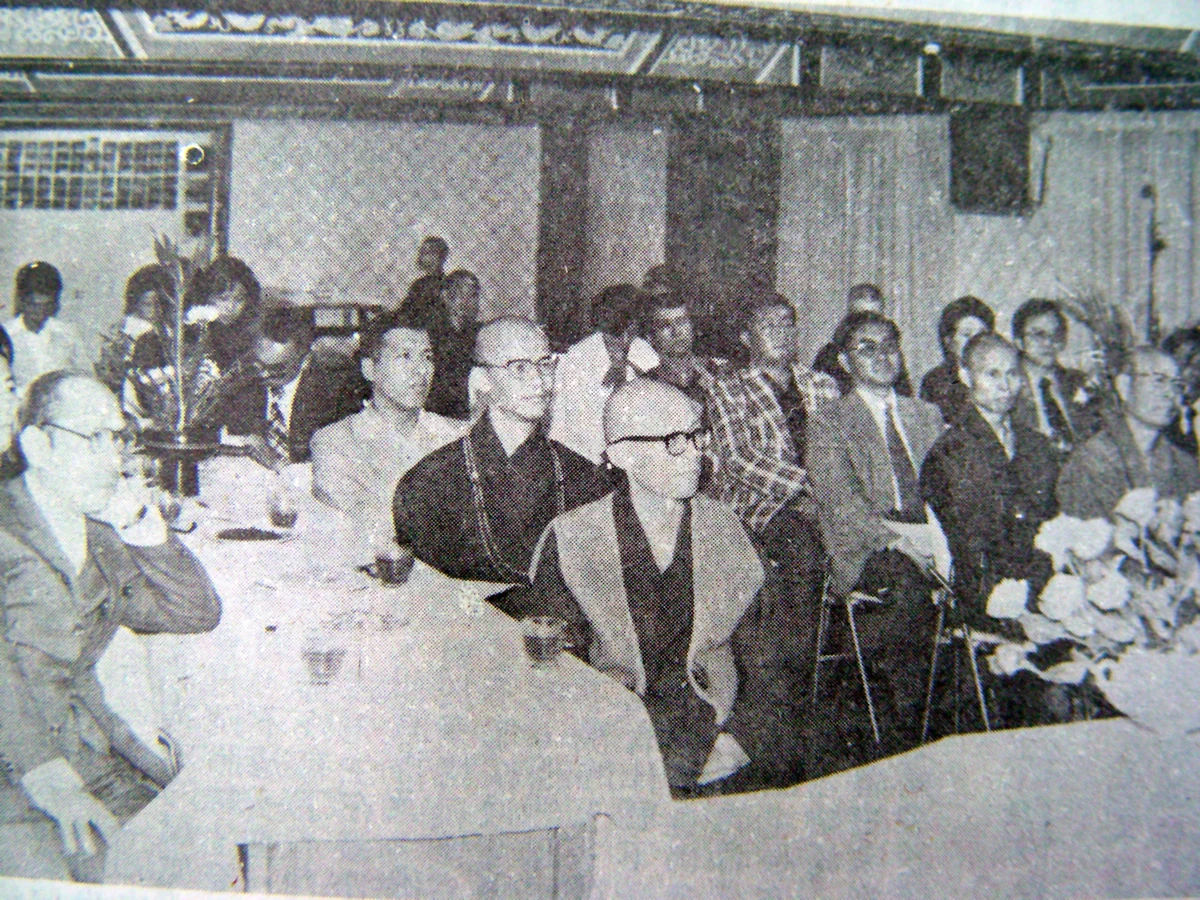
In December 1981, the Third "World Buddhist Sangha Council" was held in Taiwan, with representatives including Venerable Minh Lễ from France, Venerable Chuan Nam from Singapore, Venerables Sai Chun and Kok Kwong from Hong Kong, Venerable Tâm Châu from Vietnam, Elder Ŭihyŏn from Korea, Venerable Sheng Hsiung from India, and Elder Bai Sheng from Taiwan.

Venerable Master Hsing Yun personally led Venerables Hsin Ping, Tzu Chuang, Tzu Hui, Tzu Jung, Tzu Yi, and Graduate Institute of Indian Culture students to attend the opening ceremony at Yangmingshan Chung Shan Hall, with over 1,700 participants. He delivered welcoming remarks to Elder Bai Sheng and eminent monks from home and abroad, translated into English by Hong Kong representative Venerable Yuan Quin, into Korean by Korean Venerable Beopsan Sunim, and into Japanese by Fo Guang Shan's Venerable Tzu Hui. Fo Guang Shan dispatched 24 monastics fluent in English and Japanese to accompany tours of the various halls. Representatives praised Fo Guang Shan for having the scale and system of the great mainland monasteries of the past, as well as modern propagation methods and facilities, serving as a model for reviving Buddhism.

1982/3/30~
4/22

Leading European Inspection Delegation to Visit Europe

From March 30 to April 22, 1982, Venerable Master Hsing Yun led a European Inspection Delegation of 42 monastics and laypeople on their first visit to Europe. Over 23 days, they visited Cairo, Athens, Rome, Florence, Venice, Frankfurt, Berlin, Amsterdam, Brussels, Paris, and London.

Venerable Master said that while propagating in Cairo, Egypt's capital, he toured the pyramids and crossed the Red Sea to witness the completely red scenery of heaven and earth. He left footprints at the Champs-Élysées and Palace of Versailles in Paris, the Vatican papal residence, Venice in Italy, Greek temples, and the Colosseum. Besides touring these cultural and historical sites, he hoped that in the future, dedicated individuals would come to develop this region where the Dharma was still scarce, spreading the great principles of the Dharma.

It was not until 1990, when Venerable Master was invited by Venerable Minh Lễ, abbot of Pagode Tịnh Tâm in Paris, to preside over the temple's completion, that, due to overseas Chinese devotees' thirst for the Dharma and with their assistance, the following year Fo Guang Shan first established a center in Paris.

October 21, 1982

Nobel Prize Laureate in Literature, Aleksandr Solzhenitsyn Visits Fo Guang Shan

On October 21, 1982, the laureates of the Nobel Prize in Literature, Aleksandr Solzhenitsyn visited Fo Guang Shan, personally received by Venerable Master Hsing Yun. When visiting the Main Shrine, he naturally joined his palms in respect, displaying his reverence for religion and culture. He frequently praised the Buddhist College and various architectural artworks as rare and precious, leaving his autograph as a memento.

He was particularly interested in the 70-tiered light offering shrine in the Main Hall, repeatedly asking Venerable Master about the meaning of "lighting lamps." He voluntarily signed his name before the Buddha, adding "To Fo Guang Shan" in four characters. While visiting the "Bamboo Garden," upon learning that the name commemorated the area's name before Fo Guang Shan was founded, he deeply admired Fo Guang Shan's spirit of "remembering one's roots and valuing tradition." He greatly admired Fo Guang Shan's warm, friendly atmosphere and majestic architecture.

December 28, 1982

Korea's "Buddha Treasure Temple" Tongdosa Establishes Sisterhood with Fo Guang Shan

Tongdosa in Korea, with its 1,336 years of history, established a sisterhood with 16-year-old Fo Guang Shan, praised as a union of Buddhist tradition and modernity with profound significance.

The sisterhood ceremony was held on December 28, 1982, at Kaohsiung Cultural Center. It coincided with the third day of "Venerable Master Hsing Yun's Buddhist Lecture Series." Guests included Elder Yueji, Venerable Kai Zheng, and Kaohsiung venerable elders, with approximately 3,500 people attending.

Tongdosa's Venerable Jungbong Seongpa and Venerable Master read the sisterhood agreement in Korean and Chinese. Both sides pledged to jointly promote Dharma propagation and enhance mutual friendship, working toward the ideals of reviving Buddhism and benefiting society.

Tongdosa is renowned as the "Buddha Gem Temple" because it enshrines Buddha relics. It is one of Korea's Three Jewel Temples, along with Haeinsa and Songgwangsa. Although Fo Guang Shan was only 16 years old, it strictly follows Buddhist tradition while developing modern approaches. The two temples establishing sisterhood is the best proof of "verifying the present with the ancient," with practical benefits for world peace and Buddhist harmony.

January 1, 1983

Opening of Fo Guang Shan "Buddhist Artifacts Museum" (Later Renamed "Museum of Treasures")

On New Year's Day 1983, the "Buddhist Artifacts Museum" officially opened, Taiwan's first museum dedicated to collecting Buddhist artifacts from ancient and modern times, East and West. Besides artifacts, the museum displays Buddhist historical origins, cultural distribution, scriptures and Buddhist paintings, and stories of interactions between historical Chinese figures and Buddhism, giving devotees and visitors a concrete understanding of Buddhism. These treasured artifacts include Buddha and bodhisattva images in various materials: stone, ivory, wood carvings, bronze, ceramics, and porcelain, from countries worldwide and various Chinese dynasties. There are ritual implements from both exoteric and esoteric Buddhism, as well as calligraphy and paintings by eminent monastics and laypeople from ancient and modern times. Almost all these artifacts were purchased and collected by Venerable Master Hsing Yun over decades of traveling domestically and internationally. To realize the ideal of building the museum, wherever Venerable Master traveled, he always acquired artifacts to bring back. This not only preserves Chinese Buddhist cultural heritage but also serves the function of propagating the Dharma and guiding beings, allowing visitors to increase their Buddhist knowledge, understand religion's influence on culture and art, equivalent to a valuable lesson in Chinese Buddhist history.

January 5, 1983

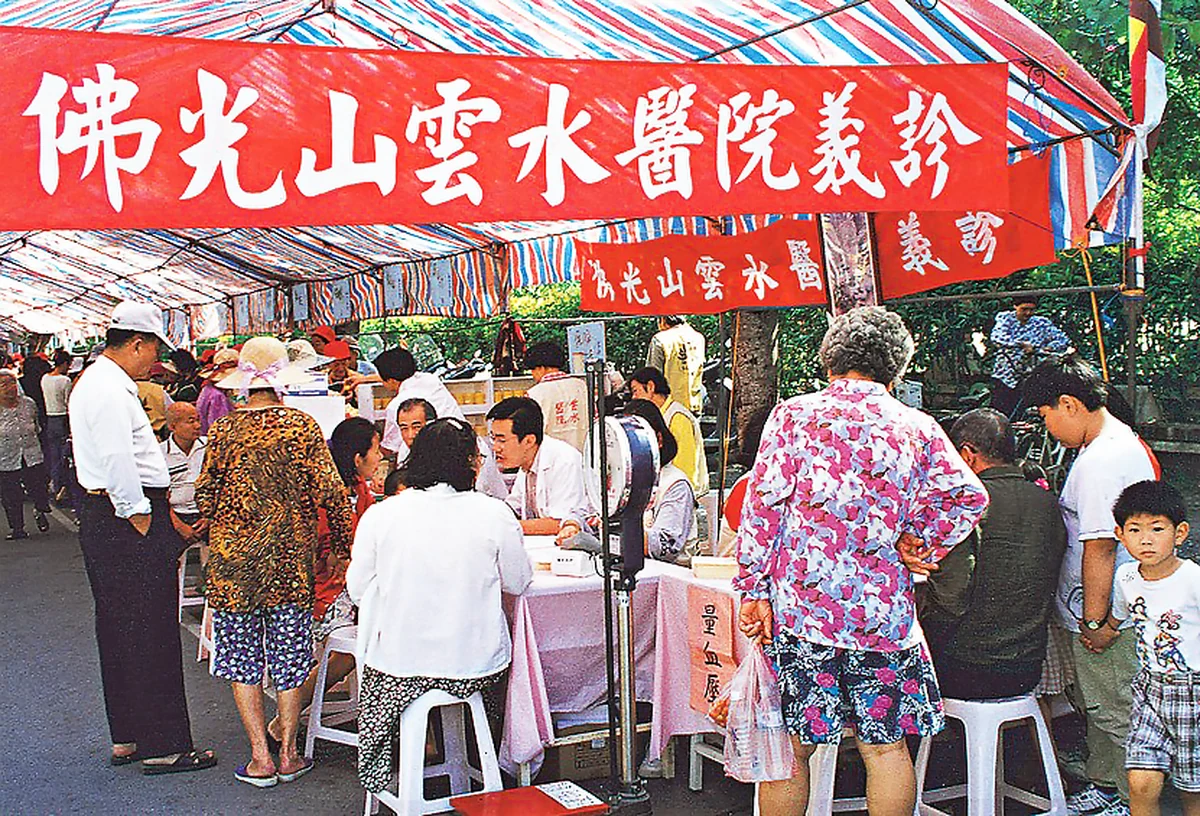
Fo Guang Shan Establishes "Mobile Clinic"

The Fo Guang Shan "Mobile Clinic" was originally called the "Fo Guang Shan Free Medical Team," established in 1976. Although the Fo Guang Clinic could provide free services to impoverished patients, people in remote areas still had difficulty accessing medical care due to transportation. Therefore, the "Dharma Propagation Free Clinic Vehicle" was established, using Fo Guang Shan's branch temples as bases, traveling like flowing clouds and water to various locations.

Venerable Master Hsing Yun noted that bringing medical care to remote areas was based on the principle of "having healthy people contribute money to treat the poor and sick." On January 5, 1983, circuit free clinics officially began, with over 20 Mobile Clinic vehicles providing daily medical services to over 1,000 beneficiaries. At the same time, monastics accompanied the team to give Dharma talks, answering patients' life questions and providing counseling as circumstances allowed.

August 1983

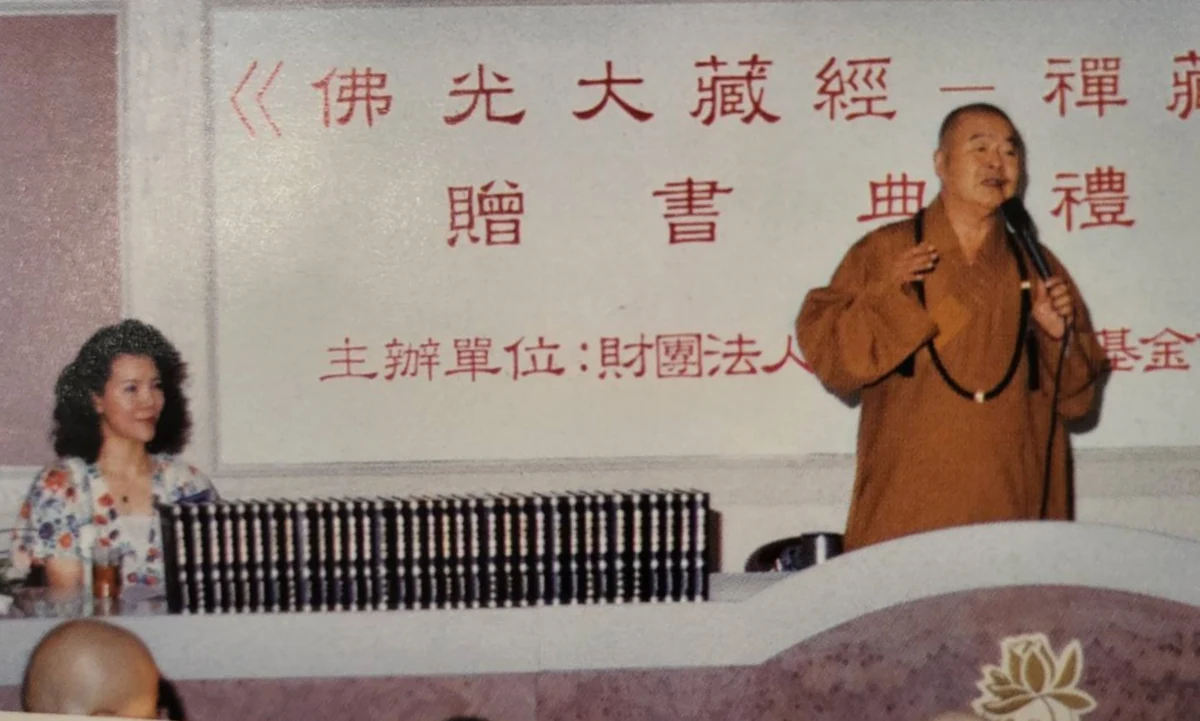
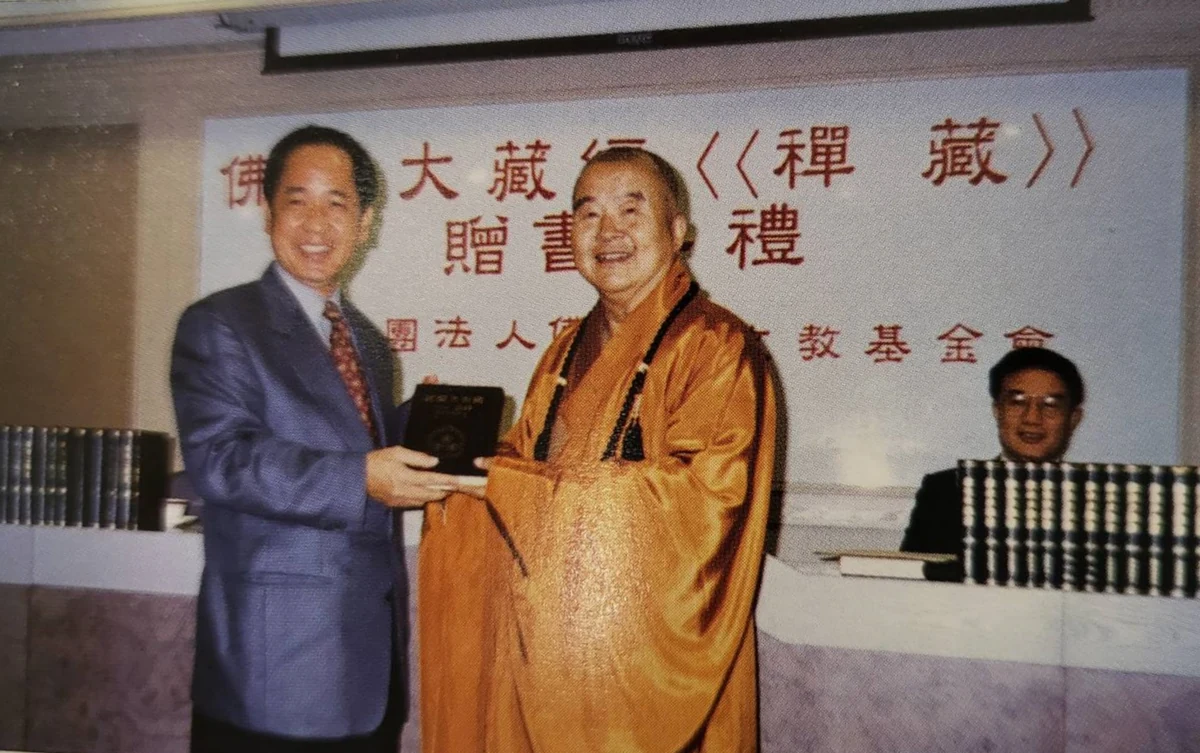
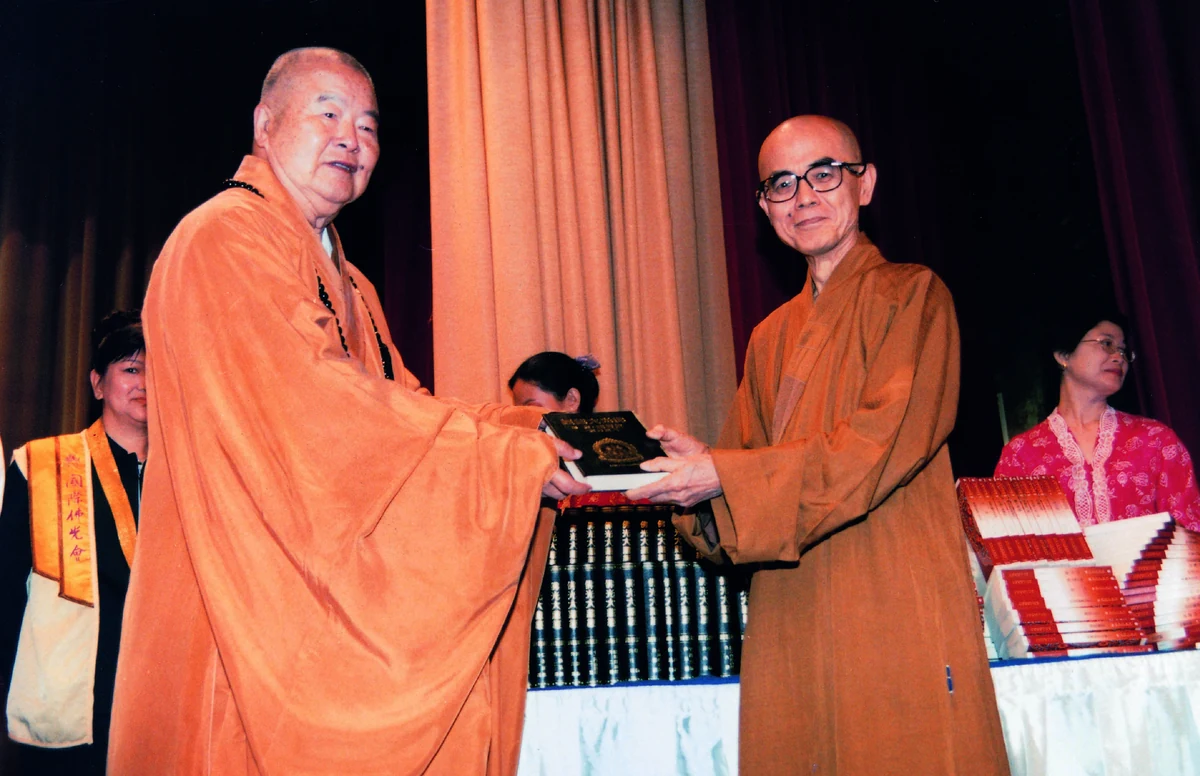
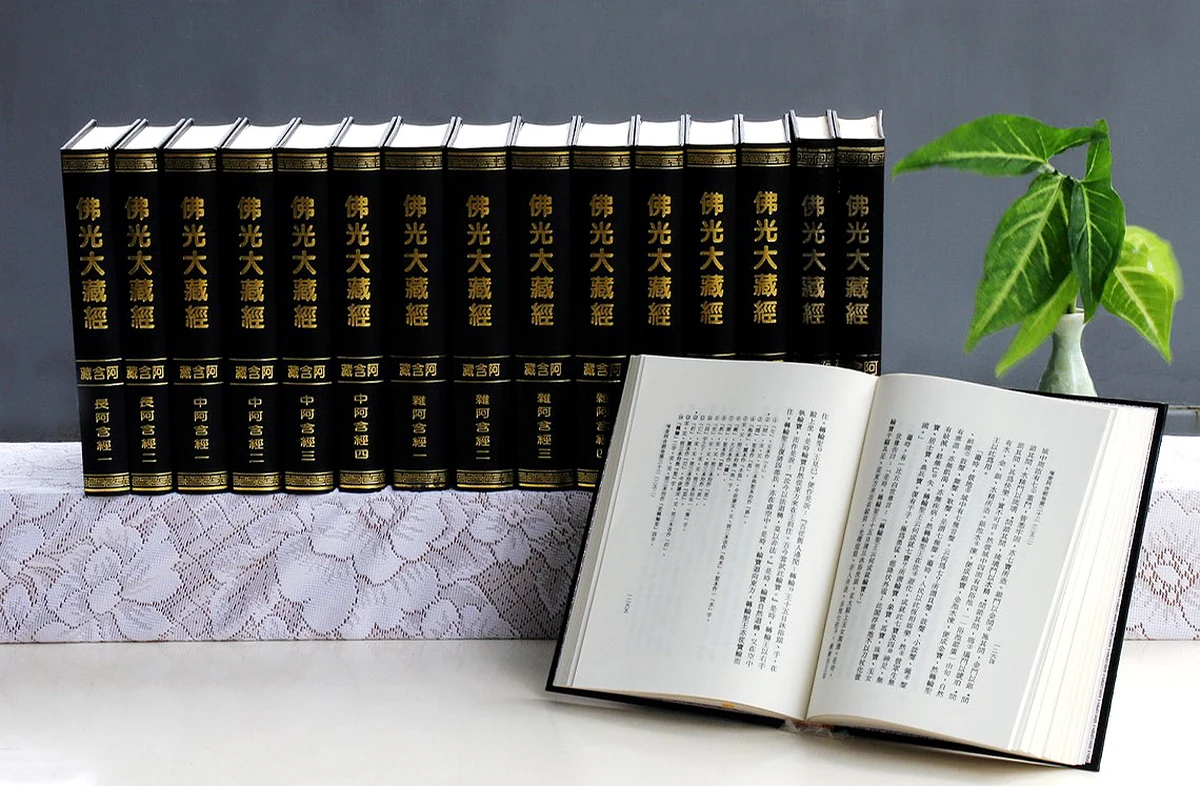
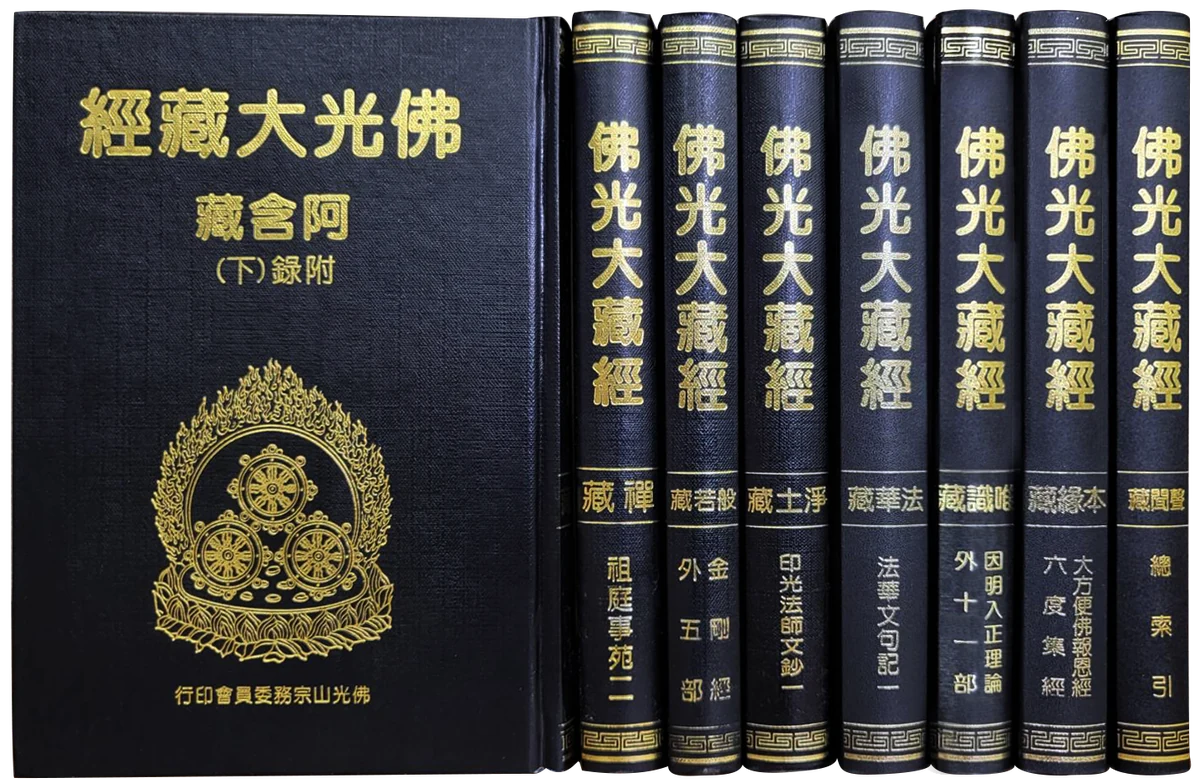
Publication of the first Fo Guang Buddhist Canon: Agama Canon

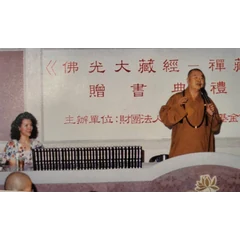
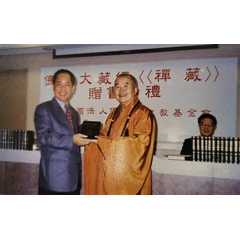
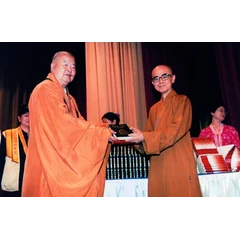
Recognizing that traditional scriptures contained numerous technical terms and terminology, making them difficult for ordinary people to access despite their desire to learn, Venerable Master Hsing Yun established the Fo Guang Shan Buddhist Canon Committee in 1977 to facilitate modern Buddhist study.

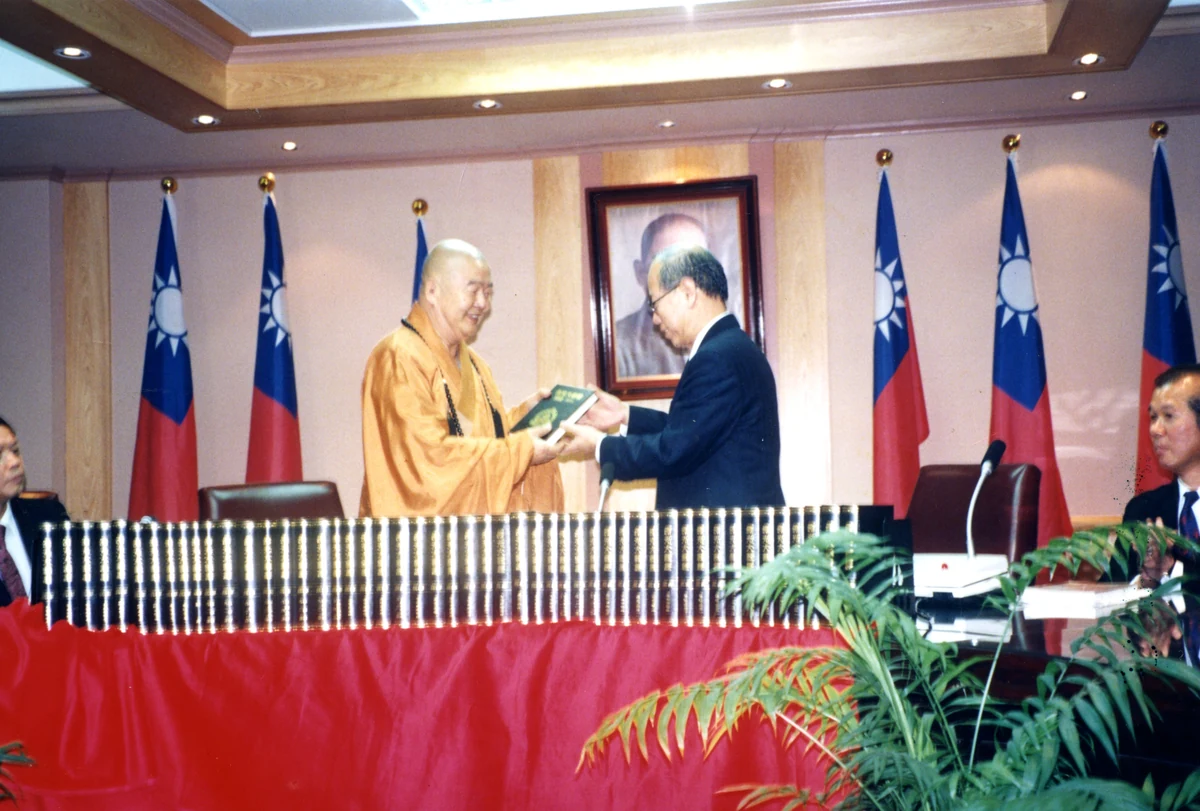
The first volume of the Fo Guang Buddhist Canon compiled by the Fo Guang Shan Buddhist Canon Committee, the Agama Canon: Saṃyukta Āgama, was published in August 1983. This was the first Tripitaka editing project in over 300 years since the Qing dynasty's Long Canon, and the first Buddhist Tripitaka undertaken by the Buddhist community with new punctuation, paragraphing, textual research, and annotation. Venerable Master encouraged: "We do not let the difficulty of cultural work diminish their enthusiasm for propagation; we do not let the challenges of cultural transmission slow our diligent steps. Our dedication truly demonstrates Fo Guang Shan's cultural character."

The Fo Guang Buddhist Canon comprises 16 categories: Agama Canon, Prajnaparamita Canon, Chan Canon, Pure Land Canon, Lotus Canon, Avatamsaka Canon, Yogacara Canon, Guhya Canon, Sravaka Canon, Vinaya Canon, Jataka Canon, Biographical Canon, Illustrated Canon, Ritual Canon, Literature and Arts Canon, and Miscellaneous Canon.

September 7, 1983

Leading the "Malaysia-Singapore Buddhist Propagation Delegation" for Dharma propagation in Malaysia

Arranged by Venerable Seet Kim Beng, President of the Malaysian Buddhist Association, and the Singapore Buddhist community, on September 7, 1983, Venerable Master Hsing Yun led the "Fo Guang Shan Malaysia-Singapore Buddhist Propagation Delegation" for intensive propagation and visitation activities. This was the first time the Malaysian Buddhist Association formally invited a foreign monk to propagate in Malaysia, opening a new page for Humanistic Buddhism in Southeast Asia.

Venerable Master and over 20 others including Most Venerables Hsin Ping and Hsin Ting visited major Buddhist centers and called on political leaders in Malaysia and Singapore, such as Singapore Ministry of Education senior official Ang Kim Choo and Malaysian Datuk Low Hooi Siah. They held over ten Buddhist lecture series, Triple Gem refuge ceremonies, and symposiums.

Venerable Master noted that each event attracted over 20,000 people, constantly feeling the warmth and earnest Dharma-seeking of local overseas Chinese and devotees, as well as the care and hospitality of Buddhist elders. He believed that with their active and courageous efforts, the future development of Malaysia-Singapore Buddhism would surely be brilliant and splendid.

April 15, 1984

Completion Ceremony of Taipei Pumen Temple

In April 1984, the Fo Guang Shan Taipei Branch "Pumen Temple" was completed. Venerable Master Hsing Yun presided and gave a Dharma talk: "Pumen is now complete, Dharma water nourishes the whole body, Buddha's light shines on devotees, the whole earth returns to spring. Now I wish that through Pumen Temple, boundless sentient beings may be guided toward the path of enlightenment."

Venerable Master recalled that Pumen Temple originated in 1959 when the "Buddhist Cultural Service Center" was established in Sanchong to provide various services to devotees. A chanting association was subsequently established. Later, to build Shou Shan Temple, the Buddhist Cultural Service Center was moved to Kaohsiung.

In 1967, when Fo Guang Shan was founded, Taipei activities had to be temporarily suspended to focus entirely on the founding construction. After the Buddhist College and Great Compassion Shrine were successively established and northern devotees increasingly returned to the mountain for pilgrimage, "Pumen Vihara" was established on Roosevelt Road in Gongguan, Taipei. Besides daily propagation, pilgrimage groups were regularly organized to return to the mountain. In 1984, recalling the struggles with difficult circumstances in the past, the vow was made to establish "Pumen Temple," a center with doors wide open for all.

September 30, 1984

First "Urban Buddhist Academy" Opens at Kaohsiung Puxian Temple

To ensure devotees balance understanding and practice, starting September 1984, Fo Guang Shan pioneered the "Urban Buddhist Academy" at Kaohsiung's Puxian Temple. Branch temples in various locations subsequently established similar programs.

The Urban Buddhist Academy actively brings Buddhism into society, achieving both depth and breadth. Unlike regular social education, it particularly emphasizes "balancing understanding and practice," besides understanding doctrine, there must be actual life experience. It not only provides Buddhist devotees an environment for studying the Dharma and establishing right knowledge and views through Dharma study, but also encourages putting it into practice. At the same time, it cultivates an atmosphere of Dharma research and elevates Buddhist devotees' cultivation, writing a new page in Buddhist propagation history.

July 29, 1985

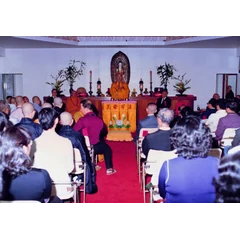
"World Fellowship of Buddhist Youth" Holds Its First Academic Conference at Fo Guang Shan

The "World Fellowship of Buddhist Youth," based in Bangkok, Thailand, held its first academic conference at Fo Guang Shan on July 29, 1985. Venerable Master Hsing Yun was invited to deliver the keynote speech "The Mission of Buddhist Youth for World Peace and National Development." Over 300 participants from 15 countries and regions and 26 organizations attended, marking a historic first for a large-scale conference organized by a Sangha community.

In his address, Venerable Master stated that young people should take responsibility for reviving Buddhism, entering society and bringing Buddhism to the international stage. He said, "Many influential historical leaders dedicated themselves to their nations in their youth. Looking at Buddhist history, Buddhist endeavors were mostly driven by young people. The Buddha attained enlightenment in his thirties; Sudhana, Nāgī, Sumati, and Cunda were young Buddhist messengers of peace and models of enlightenment. Xuanzang entered India seeking the Dharma at age 26; Huineng realized the Chan path at 24, all are models for Buddhist youth. He hopes Buddhist youth, whether monastic or lay, male or female, will take national development as their family duty, world peace as their vocation, and propagating the Dharma as their mission."

September 22, 1985

Venerable Master Hsing Yun Retires According to Institutional Regulations

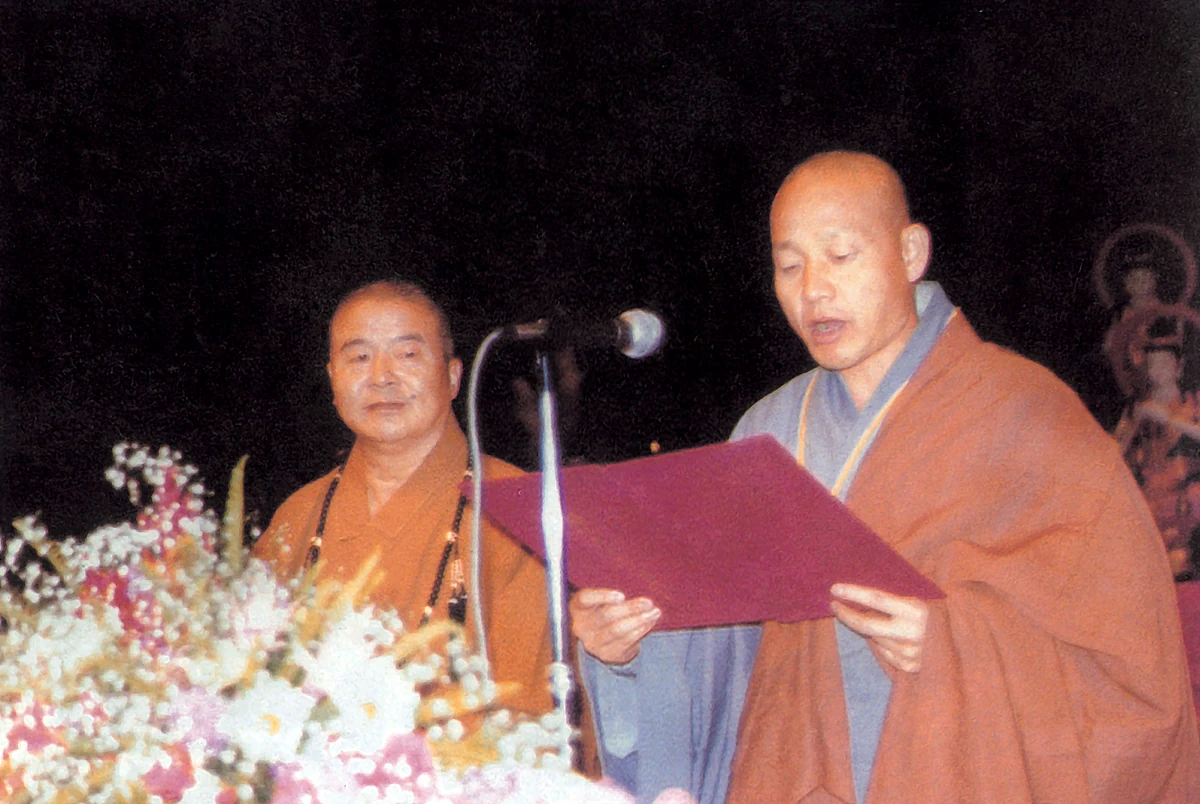
In 1985, on the eve of his 60th birthday, Venerable Master Hsing Yun announced his retirement. He expressed that it felt like welcoming a new life. Eighteen years ago, he came to Kaohsiung empty-handed to found Fo Guang Shan; now he was leaving empty-handed as well. Coming and going, there was no difference. Venerable Master said that abbots retiring was very common in Buddhism. In the Fo Guang Shan organizational charter, abbots serve six-year terms with one possible reappointment. He had intended to retire six years earlier, but as it was still an expansion period, at everyone's request he exceptionally served two additional terms. Now that the main construction was largely complete, for the continuation of Buddhist lineage and generational succession of talent, he transmitted the true Dharma to Most Venerable Hsin Ping, the 49th generation of the Linji school and second generation of Fo Guang Shan. Venerable Master's retirement and new abbot's installation ceremony was held on September 22. Venerable Master transmitted the robe and bowl to Most Venerable Hsin Ping and composed a verse: "From Sheshan Qixia Temple, the light was transmitted to Taiwan; Buddha's light universally shines, and the Dharma water flows far and wide.

April 1986

Discussing "Buddhist Views on Organ Donation"

In April 1986, the "Transplantation Society of Taiwan" held an academic symposium, and Venerable Master Hsing Yun was invited to discuss "Buddhist Views on Organ Donation" with several medical professionals.

Venerable Master stated, "Currently, philanthropists and virtuous people in society all advocate 'organ donation,' and I personally support it. Organ donation is deeply meaningful."

The Treatise on the Great Man states: 'Bodhisattvas give their bodies to seek all-knowledge and out of compassion for sentient beings, simultaneously inspiring miserly beings to develop the mind of giving."

Over 2,500 years ago, when Śākyamuni Buddha was a king in a past life, he performed organ donation with his willingness to 'cut flesh to feed an eagle,' this act helped him accomplish the bodhisattva path.

Ancient eminent monks in turbulent times, to relieve sentient beings' suffering and for the needs of truth and Dharma transmission, sacrificed their lives, giving their lives to sentient beings and dedicating themselves to the community, all extensions of organ donation's meaning. The value of organ donation has four points:

1) Leaving love in the human world;
2) Resource recycling;
3) Compassion, joy, and giving;
4) Extending life.

Therefore, organ donation's significance is worth promoting.

July 26, 1986

Entering Solitary Retreat at Hsi Lai Temple for Nearly Half a Year

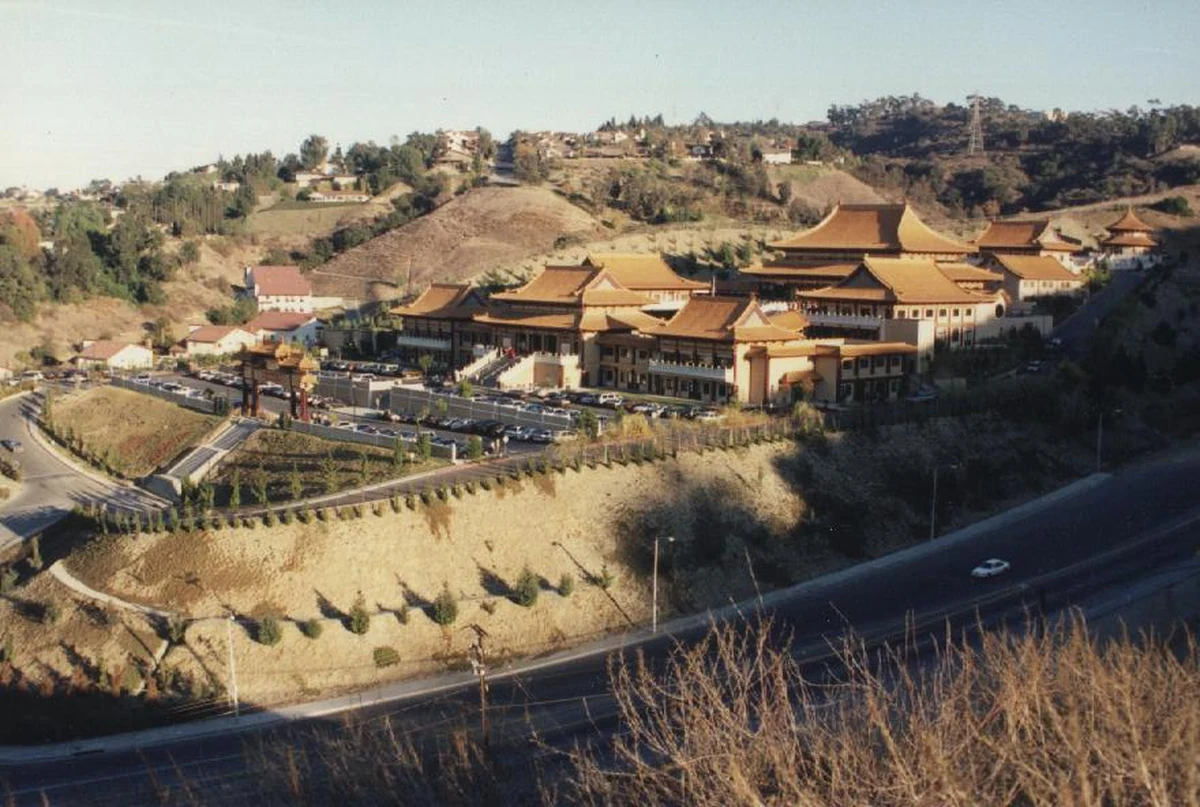
At the end of July 1986, to allow the succeeding abbot Most Venerable Hsin Ping to work smoothly, and to reposition and adjust for future propagation and cultivation, Venerable Master Hsing Yun flew to Hsi Lai Temple in America for half a year of intensive retreat.

During this time, Venerable Master realized that life's greatest happiness is being busy amid leisure and leisurely amid busyness, alternating between activity and rest. He thus composed a verse:

"The Fo Guang Shan people come from the West, the Venerable Mahākāśyapa goes to the East; coming and going are all thus, forever a busy-leisurely person in the world."

December 26, 1986

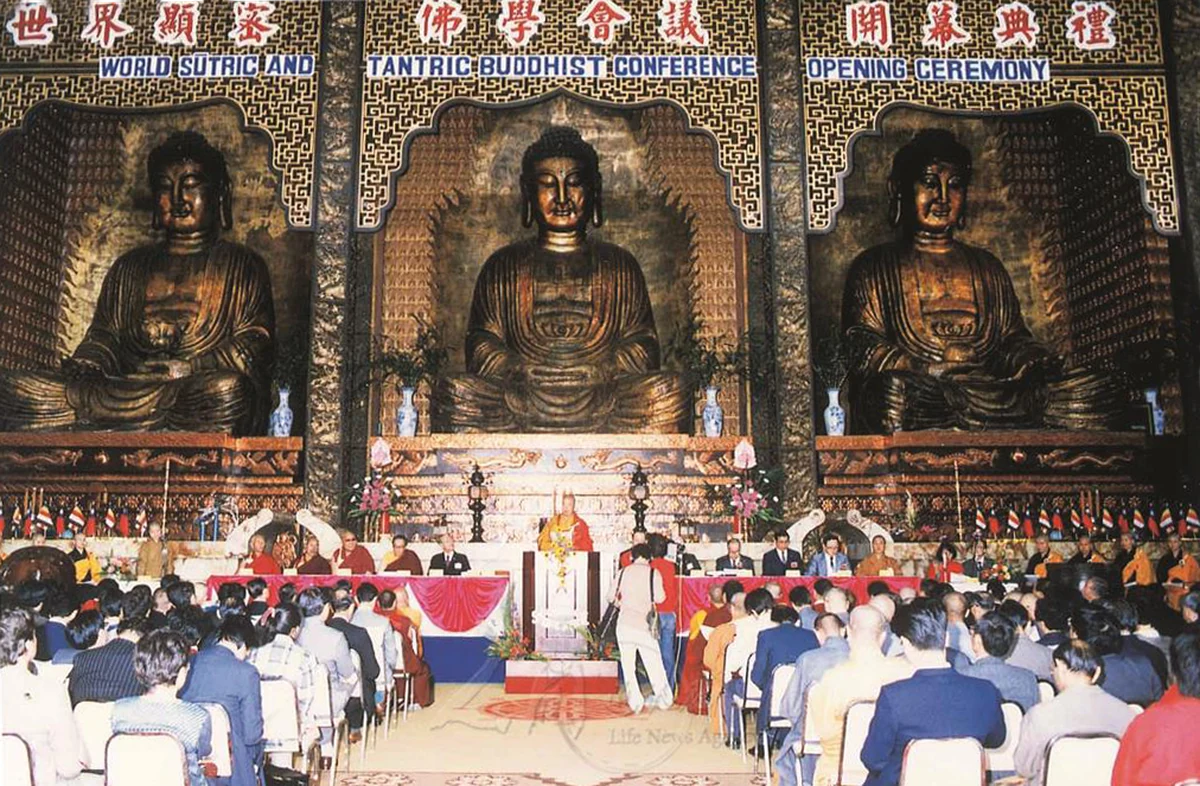
Opening Ceremony of World Exoteric-Esoteric Buddhist Conference

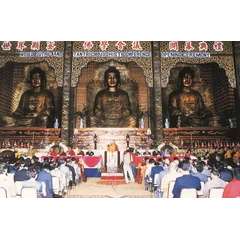
The opening ceremony of the First "World Exoteric-Esoteric Buddhist Conference" was solemnly held at the Fo Guang Shan Main Shrine on December 26, 1986. The conference was personally presided over by Fo Guang Shan founder Venerable Master Hsing Yun, attracting over 300 expert scholars, lamas, and eminent monks from 19 countries including the United States, Japan, Korea, and India. With "Harmony and Development" as its theme, the conference aimed to promote academic exchange and mutual understanding between exoteric and esoteric Buddhism, an important milestone in the Buddhist community.